
Carbon Capture Lawyer and CCUS Transactions: Structuring Projects, Infrastructure, Investment, and Commercial Agreements
A carbon capture lawyer handles the legal work behind carbon capture, utilization, and storage projects, including subsurface rights, permitting, tax credits, pipeline and other midstream agreements, commercial contracts, financing documents, and closing requirements. Carbon capture is essential for achieving net zero emissions, and as larger CCUS projects become more financially viable through incentives such as Section 45Q and broader regulatory support, the legal complexity behind each project is growing in step with the scale of investment.
This page explains how INK™ Law structures, negotiates, and closes CCUS transactions for energy companies, developers, investors, and private equity-backed portfolio companies across the United States, including commercial-scale projects in states such as Colorado, Texas, Wyoming, and North Dakota. It focuses on the legal issues that shape project development and execution: subsurface rights, environmental permitting, tax credit strategy, pipeline and other midstream infrastructure agreements, project finance, joint ventures, governance, and litigation readiness.
Key Takeaways
INK™ Law helps energy companies, developers, and investors structure carbon capture, utilization, and storage (CCUS) projects across the U.S., with particular focus on Colorado, Texas, Wyoming, North Dakota, and other key basins. The firm’s team includes attorneys with deep experience in energy transactions, corporate law, and commercial agreements tailored to the unique demands of CCUS project development.
- CCUS projects turn on subsurface rights, midstream infrastructure, tax credits (including Section 45Q after the 2022 Inflation Reduction Act), and integrated commercial agreements. These are core strengths of INK™ Law’s energy and corporate practice.
- The firm advises on project development, joint ventures, project finance, M&A, and long-term offtake and storage agreements for carbon capture and storage tied to oil & gas, natural gas, and renewable energy projects.
- Carbon capture projects are capital-intensive and technologically complex, requiring counsel that understands both the engineering realities and the deal mechanics.
- INK™ Law acts as outside general counsel for energy companies, coordinating entity structuring, corporate governance, securities, and project-specific agreements under a single strategy.
Ready to discuss an upcoming or active CCUS project? Call INK™ Law at (720) 307-2627 or message us online for a confidential consultation.
INK™ Law’s Role as Carbon Capture and CCUS Transaction Counsel
A carbon capture lawyer specializes in carbon capture, utilization, and storage, working at the intersection of energy law, environmental law, environmental regulation, tax incentives, and commercial deal-making. For developers, operators, and investors, that means one attorney or team coordinating the subsurface rights, permitting, tax credit qualification, pipeline agreements, and financing documents that make or break a CCUS project.
INK™ Law’s energy practice covers upstream oil & gas, midstream infrastructure, natural gas, and renewables. That background translates directly into carbon capture and storage project counseling because CCUS deals share the same building blocks: site control, rights-of-way, offtake contracts, regulatory filings, and multi-party ownership structures. Legal frameworks for CCUS include tax, environmental, and contract law, and INK™ Law integrates all three into each engagement.
The firm advises clients on both carbon capture utilization (using carbon dioxide for enhanced oil recovery or industrial processes) and long-term carbon capture and storage (CCS projects) in saline formations, depleted reservoirs, and other subsurface settings. Lawyers handle regulatory compliance and permitting for CCUS projects alongside the corporate, M&A, securities, and real estate work that surrounds them.
Planning a CCUS project? Call (720) 307-2627 to speak with an INK™ Law attorney about structuring and de-risking your carbon capture investment.
The Business Case for Carbon Capture, Utilization, and Storage (CCUS)
CCUS is expected to play a central role in the energy transition while remaining central to global net zero emissions targets, and project activity in the U.S. accelerated after the Inflation Reduction Act raised Section 45Q credit values in 2022. For non-DAC geological sequestration, facilities meeting prevailing wage and apprenticeship requirements now qualify for credits of approximately $85 per ton of carbon dioxide; direct air capture facilities can reach $180 per ton under the same labor compliance regime. These credit levels have made new projects financially viable across Texas, Louisiana, Wyoming, and the Midwest.
Governments are setting aggressive net zero targets that include CCUS technology as a required tool, not an optional one. CCUS can lower CO2 emissions from hard-to-abate sectors and support global energy growth without requiring immediate shutdown of industrial assets. Carbon capture utilization (such as CO2 used in enhanced oil recovery) and permanent carbon capture and storage (injection into saline formations under Class VI permits) carry different legal structures, risk profiles, and revenue models. Understanding which model fits a given asset is a threshold question for any proposed development.
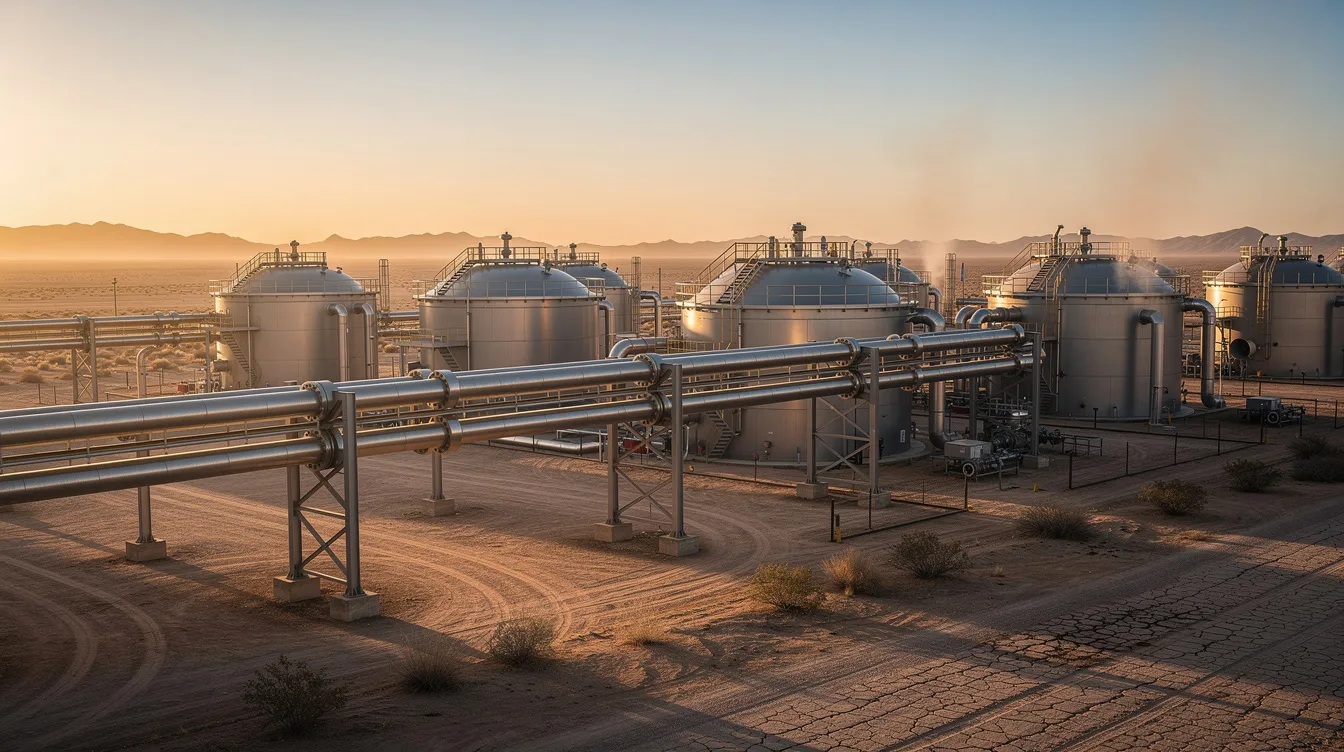
Many INK™ Law clients are mid-market developers, private equity-backed portfolio companies, and infrastructure investors looking to monetize 45Q tax credits and long-term storage fees. The firm’s energy practice supports these clients from feasibility through commercial operations.
Interested in whether CCUS structures make sense for your assets? Contact INK™ Law online to start the conversation.
Core Legal Issues in Carbon Capture and Storage Project Development
Carbon capture and storage projects layer three distinct asset categories, each governed by its own legal regime: capture facilities (the equipment that separates carbon dioxide from flue gas or ambient air), CO2 transportation (pipelines, gathering systems, and in some cases truck or rail), and long-term storage or utilization arrangements (injection wells, monitoring systems, and site stewardship). CCUS projects are heavily regulated, and each layer introduces a different set of permits, contracts, and risk allocation challenges.
Subsurface Rights
Pore space ownership is foundational for any carbon capture and storage project. In Wyoming and North Dakota, statutes provide some clarity; in Texas and Colorado, case law and statutory gaps create uncertainty. Common law precedents like Emeny v. United States (holding that a lease to extract minerals did not include rights to use pore space afterward without an express grant) and Tate v. United Fuel Gas Co. (reaching a similar conclusion in West Virginia) underscore that storage rights must be expressly acquired, not assumed.
Lawyers negotiate pore space acquisition for carbon storage by securing leases, easements, and storage rights that layer over existing mineral and surface estates. INK™ Law builds on its oil & gas and mineral rights experience to handle practical issues:
- Stacking pore space rights over existing mineral and surface estates
- Unitization or pooling of acreage for a storage project field
- Managing conflicts between existing production and new injection plans
- Drafting CO2 storage leases, pore space easements, surface use agreements, and coordination agreements with current operators
In Texas, recent legal commentary has highlighted that mineral rights owners could legally resume drilling into formations used for CO2 storage absent an express storage grant, potentially triggering a recapture event under 45Q if sequestered carbon dioxide is released. Poor title work or unclear storage site control can collapse project finance. INK™ Law conducts detailed title and contract due diligence similar to an oil & gas asset acquisition, examining every interest in the target formation before a client commits capital.
Environmental Permitting
CCUS projects require navigation through environmental policy and complex project finance at every stage. Civil and environmental justice considerations impact CCUS project development as well, particularly in siting decisions and public comment processes. Key categories of legal risk include:
- Subsurface rights and pore space ownership
- Federal and state environmental permitting (EPA Class VI, state oil & gas commissions)
- Pipeline and midstream regulation
- Tax credit eligibility and recapture under the internal revenue code
- Commercial and offtake risk allocation among emitters, transporters, and storage operators
INK™ Law integrates these topics into a single CCUS project development timeline, coordinating engineers, environmental consultants, and local counsel in multiple states. Early engagement of carbon capture counsel prevents expensive redesigns of project scope, contract terms, and financing structures later in the development cycle. When a developer discovers a pore space title defect or a permit gap six months before a financing close, the fix is orders of magnitude more expensive than catching it at feasibility stage.
Pipeline Regulation
CO2 pipelines, gathering systems, and connections to saline formation hubs or enhanced oil recovery projects look very similar to natural gas and NGL midstream infrastructure from a legal standpoint. The same concepts apply:
- Rights-of-way and easements
- Open season and capacity allocation
- Interconnection and transportation agreements
- Ship-or-pay or take-or-pay commitments
Pipeline siting involves right-of-way agreements and state utility commission approvals, and CO2 pipelines are subject to PHMSA safety oversight at the federal level.
A major legal question is whether a given CO2 pipeline falls under federal jurisdiction (for example, the federal energy regulatory commission in certain scenarios) versus purely state-regulated lines. The answer affects project costs, tariff structures, and timelines.
The Shute Creek 7-34 project in Wyoming illustrates the complexity. Approved by BLM and the state, it includes an injection well exceeding 18,000 feet in depth, a pipeline corridor of more than 12 miles using federal pore space, and coordination between federal land management, subsurface rights, and environmental approvals.
INK™ Law drafts bankable midstream agreements that coordinate with lenders’ and investors’ requirements. Typical documents include:
- Transportation and storage agreements with minimum volume commitments
- CO2 gathering agreements with quality specifications (purity, water content, pressure)
- Shared pipeline or hub infrastructure arrangements for multiple emitters
- EPC contracts for CO2 compression and pipeline construction
- Credit support, step-in rights, and default remedies aligned with a midstream company’s financing covenants

Tax Credit Eligibility
Tax incentives, such as IRC Section 45Q, are crucial for carbon capture project finance. The 2022 Inflation Reduction Act raised credit values and broadened eligibility. For non-DAC geological sequestration, the base credit starts at roughly $17 per ton for equipment placed in service after January 1, 2023, jumping to $85 per ton when prevailing wage and apprenticeship requirements are met. For direct air capture, the enhanced credit reaches $180 per ton with the same labor compliance.
Developers monetize these section 45Q tax credits through several structures:
- Tax equity financing, where investors purchase partnership or LLC interests to absorb credits
- Credit transferability under post-IRA rules, where credits are sold directly to unrelated taxpayers
- Direct pay for eligible entities
Revenue also flows from long-term storage fees or tariffs paid by emitters and off takers.
The IRS issued Notice 2026-1 on December 19, 2025. Notice 2026-1 provides a safe harbor for Section 45Q credits, allowing certification by a qualified engineer or geologist if EPA’s Greenhouse Gas Reporting Tool is not operational by the June 2026 deadline. Separately, EPA proposed repealing greenhouse gas reporting requirements for credits, adding regulatory uncertainty that must be addressed in deal documents.
Recapture risk is real. Under 26 C.F.R. § 1.45Q-5, if stored carbon dioxide leaks or is released, previously claimed credits must be repaid with interest using a LIFO rate schedule. In one reported example, a recapture event triggered repayment obligations exceeding $89 million across multiple tax years. INK™ Law coordinates with tax advisors to structure credit-sharing indemnities, monitoring covenants, and operating procedures that allocate recapture risk among parties.
CFOs, sponsors, and investors who need legal help aligning project documents with their tax and finance models should call (720) 307-2627 for a strategy session.
Federal and State Regulatory Framework for CCUS Projects
EPA Class VI Permitting
EPA Class VI well permits are required for injecting carbon dioxide underground for long-term geological sequestration. The Class VI permitting process includes:
- Public-comment periods on draft permits
- Site characterization
- Area-of-review delineation
- Mechanical integrity testing
- Post-closure care plans
Environmental reviews must comply with mandates like the national environmental policy act (NEPA) and the Clean Water Act when federal actions or rights-of-way are involved.
State Primacy and Jurisdiction
State-specific and federal jurisdiction issues arise in CCUS projects because only three states currently hold Class VI primacy:
- North Dakota (since 2018)
- Wyoming (2020)
- Louisiana (effective February 2024)
West Virginia and Arizona have recently gained or are pursuing primacy, and Texas is in pre-application. In states with primacy, permitting timelines can run faster because the state agency issues the permit; in states where the environmental protection agency retains authority, regulatory resource constraints can extend review periods.
Risk Allocation in Permitting
Legal developments related to CCUS projects are crucial for success, especially when contracts must allocate permitting and compliance risk. INK™ Law does not hold itself out as an environmental boutique but works closely with specialist consultants while managing regulatory risk allocation in contracts. That means drafting:
- Conditions precedent tied to permit milestones
- Change-in-law clauses that address new environmental regulations from state regulations or federal law
- Termination rights that protect both sides if permitting timelines slip beyond agreed deadlines
Developers and operators who need a realistic regulatory timeline and risk allocation plan should call (720) 307-2627 to discuss their permitting roadmap.
Commercial Structures: Capture, Utilization, and Storage Agreements
CCUS projects typically require at least three categories of contracts:
- Capture/supply agreements
- Transportation agreements
- Storage or utilization/offtake agreements
All must be integrated with project finance documents so that lenders and tax equity investors can underwrite the revenue stream.
Capture and Supply Agreements
INK™ Law helps clients negotiate long-term CO2 supply agreements with industrial emitters, power plants, ethanol plants, or natural gas processing facilities. These contracts allocate:
- Performance risk
- Planned and unplanned outages
- Emissions-reduction metrics that affect carbon credits and other tax credits
Value-chain agreements are key in carbon markets and commercial contracts, covering everything from capture volumes to delivery specifications to credit-sharing mechanics.
Storage and Utilization Agreements
Storage and utilization agreements address:
- Injection capacity
- Pressure and deliverability specifications
- Monitoring and verification standards
- Liability for leaks or failure to qualify for tax credits
- Long-term site stewardship obligations
Carbon credit trading involves legal mechanisms for compliance and offsets, including voluntary carbon markets, low carbon fuel standard (LCFS) credits, and RINs.
Change-in-Law Provisions
Change-in-law provisions are critical. If the environmental protection agency issues new requirements, or if state regulations shift, the contracts must allocate that risk. INK™ Law’s experience in energy M&A, joint operating agreements, and long-term commodity contracts provides a strong base for drafting these integrated CCUS commercial frameworks.
Joint Ventures, Ownership Structures, and Governance for CCUS Projects
Common ownership models for ccus projects include separate capture and storage entities, multi-party transportation and hub companies, and vertically integrated projects with strategic partners and investors. Carbon capture lawyers must understand both legal and technical aspects of projects to design governance that works across a 20- to 30-year operating horizon.
Governance Topics in CCUS Joint Ventures
INK™ Law uses its corporate and M&A practice to structure entities (often Delaware LLCs or LPs) that allocate decision-making authority, capital commitments, and risk among participants. Core governance topics for negotiating joint ventures include:
- Management and voting thresholds for major decisions (new projects, budget overruns, abandonment)
- Capital call mechanics and default remedies
- Transfer restrictions, tag/drag rights, and buy-sell or exit mechanisms
- Alignment with lender and tax equity requirements, including consent rights, cash waterfall structures, and step-in rights after defaults
The firm translates complex technical and regulatory issues into practical governance terms that decision makers and boards can approve with confidence.
Financing, Securities, and Project-Level Investment in CCUS
CCUS projects blend project finance, corporate credit facilities, tax equity, and in some cases private placements or other securities offerings. Lawyers structure non-recourse debt and tax-equity partnerships for project financing, and INK™ Law advises sponsors, developers, and financial institutions on these structures.
The firm’s energy finance practice covers:
- Regulation D private offerings
- Preferred equity
- Convertible instruments
- Secured lending
Collateral packages for CCS projects may include pipelines, injection wells, storage rights, and permit interests. Financing documents must coordinate with commercial contracts: tying conditions precedent to permits and offtake agreements, aligning force majeure and termination rights, and ensuring lenders have clear foreclosure paths.
Private equity investors and sponsors considering capital raises for CCUS projects can contact INK™ Law at (720) 307-2627 or through the online contact form to discuss finance options and securities compliance.
Mergers, Acquisitions, and Asset Transactions Involving CCUS Assets
CCUS projects intersect with traditional oil & gas and midstream M&A in several ways: acquiring depleted reservoirs for storage, buying or selling CO2 pipelines, or acquiring emitting facilities to integrate capture and storage. INK™ Law’s M&A team applies the same due diligence frameworks used in oil & gas asset acquisitions, examining title, existing gathering and processing contracts, environmental liabilities, and regulatory approvals.
CCUS-Specific Risks in M&A
Representations, warranties, indemnities, escrows, and R&W insurance must be tailored to CCUS-specific risks:
- Subsurface migration
- Monitoring and verification obligations
- 45Q recapture exposure
Closing and post-closing actions unique to CCUS include updating operator designations, transferring permits and field development plans, and recording pore space or storage rights across multiple counties.
The firm helps align CCUS asset transactions with broader corporate strategy, including future bolt-on acquisitions, joint development areas, and integration into existing midstream or renewable energy portfolios.
Integrating CCUS with Oil & Gas, Natural Gas, and Renewable Energy Projects
The trend toward integrating carbon capture with natural gas-fired power plants, LNG and gas processing facilities, ethanol plants, cement plants, and renewable hydrogen or ammonia projects continues to accelerate. BKV Corporation’s Cotton Cove and Eagle Ford CCS facilities in Texas, which commenced operations by mid-2026 and sequester approximately 120,000 metric tons of CO2 annually combined, illustrate how carbon capture facilities are being layered onto existing natural resources operations.
Shared Infrastructure and Agreements
INK™ Law handles site control, interconnection, EPC/BOP contracts, and O&M agreements alongside CCUS layers. The firm structures shared infrastructure agreements for pipelines, compression, injection wells, and monitoring equipment used by multiple emitters or storage customers. CCUS can support ESG strategies and compliance reporting, aligning greenhouse gas emissions reductions with investor expectations and air quality mandates.
Integrated energy and CCUS developers should contact INK™ Law to coordinate their entire project stack with a single legal team.
Dispute Avoidance, Risk Allocation, and Litigation Readiness in CCUS Projects
Complex CCUS and CCS projects will face disagreements over performance, permitting delays, cost overruns, or tax credit qualification. Continuing obligations for carbon storage involve financial responsibility and corrective actions, and long-term liability issues must be addressed before the first ton of carbon dioxide is injected. Monitoring and reporting obligations exist even after CO2 is stored underground, sometimes extending decades past injection operations cease.
Key Risk Categories
Risk mitigation for carbon dioxide leakage is an important legal concern, and INK™ Law’s commercial litigation and energy disputes experience directly informs contract drafting. Key risk categories include:
- Subsurface migration or plume behavior deviating from models
- Unexpected regulatory changes at the state or federal government level
- Monitoring and reporting failures triggering 45Q recapture
- Long-term site closure obligations and transfer of stewardship
- Allocation of responsibility among JV partners, operators, and service providers
Dispute Resolution and Litigation Readiness
The firm drafts indemnities, limitations of liability, dispute resolution procedures (mediation, arbitration, forum selection), and insurance requirements designed to prevent disputes before they escalate. When litigation or arbitration becomes necessary, INK™ Law is prepared to handle it.
Clients already facing a dispute or anticipating one should call (720) 307-2627 for a case assessment or reach out online.
Why Energy Developers and Investors Choose INK™ Law for Carbon Capture and CCUS
INK™ Law combines energy, corporate, M&A, securities, and commercial litigation capabilities in a single firm built for the complexity of CCUS. The firm’s geographic focus spans Colorado, Arizona, Utah, Wyoming, Texas, North Dakota, Oklahoma, and major energy hubs including Denver, Houston, Phoenix, Salt Lake City, and Los Angeles, while representing clients across the United States.
The team has extensive experience advising clients that include exploration and production companies, midstream operators, renewable energy developers, investors, and energy-focused private equity funds. INK™ Law frequently serves as outside general counsel for energy companies, coordinating everything from entity structuring and corporate governance to project-specific agreements and litigation strategy.
The firm’s value in CCUS transactions comes from connecting regulatory matters, commercial deal terms, and financing requirements into a single workstream, so that a client does not discover at financing close that a pore space lease, a pipeline easement, or a tax credit covenant has a gap.

How to Engage INK™ Law on a Carbon Capture or CCUS Project
When a new energy client contacts INK™ Law about a storage ccus project, the process moves quickly:
- Initial call: Scope the project, identify the regulatory jurisdictions involved, and assess client needs.
- Document review: Examine any existing term sheets, JV agreements, engineering or environmental reports, and rights-of-way or lease forms.
- Scoping memo: Deliver a written summary of legal workstreams, estimated timelines, and fee structure.
- Ongoing execution: Draft, negotiate, and close agreements on a timeline coordinated with engineering milestones and financing targets.
Before reaching out, gather any preliminary engineering or environmental reports, draft JV agreements, investor term sheets, and existing lease or easement forms. The firm’s process is designed to match the complexity and speed of energy transactions, focusing on practical deliverables like risk maps, term sheet markups, and coordinated closing checklists.
Call INK™ Law at (720) 307-2627 or send a message through the secure contact page to schedule a confidential consultation.
Frequently Asked Questions about Carbon Capture and CCUS Legal Issues
What types of clients typically hire a carbon capture and CCUS lawyer?
INK™ Law works with energy companies, midstream operators, industrial emitters, project developers, private equity investors, and infrastructure funds involved in CCUS value chains. The firm focuses on sophisticated, commercial-scale projects rather than one-off individual matters. Clients typically operate in Colorado, Texas, the Rockies, and other key U.S. energy regions. The CCUS legal field has grown rapidly; firms like Bracewell represent stakeholders in CCUS projects and transactions, Lawdragon listed eight Jackson Walker partners as leading environmental lawyers in 2024, and Michael Nasi was recognized as a Thought Leader in 2024. INK™ Law brings distinct value through its integrated energy, corporate, and transactional platform. If you are unsure whether your project is a fit, reach out online for a candid assessment.
When in the project lifecycle should we bring in CCUS counsel?
Engage counsel as early as possible, ideally at the feasibility or pre-FEED stage. At that point, site control, permitting strategy, tax credit planning, and commercial contract frameworks can be aligned before capital is committed. INK™ Law can also step in mid-project, for example when financing is being arranged or a dispute arises, but early involvement usually reduces cost and delay. Call (720) 307-2627 to discuss timing based on your specific project status.
Do we need separate lawyers in each state where our CCUS project operates?
INK™ Law represents clients across multiple states and coordinates with trusted local counsel for state-specific issues such as local permitting, title recording in south dakota or new mexico, or litigation in a particular forum. The firm serves as central strategic and transactional counsel, ensuring consistency in project structure, commercial terms, and financing documents. This model is valuable for multi-state pipeline transportation corridors, storage hubs, and portfolios of emitting facilities spread across different jurisdictions.
How long does it typically take to structure and paper a CCUS transaction?
A straightforward bilateral storage agreement may take several months once commercial terms are agreed. Large, multi-party, project-financed CCUS hubs often require 6 to 12 months or longer. Timing depends on regulatory programs and permitting milestones, engineering and environmental studies, lender and investor requirements, and governance complexity. Contact INK™ Law at (720) 307-2627 or via the contact page to develop a transaction timeline tailored to your project.
How do legal fees work for CCUS and carbon capture projects?
INK™ Law typically works on hourly or blended fee arrangements for complex CCUS matters, sometimes using phased budgets or fixed-fee modules for discrete components like initial structure reviews or term sheet negotiations. The firm discusses scope and fee expectations at the outset and revisits them as project needs evolve, so decision makers can plan and obtain any necessary internal approvals. Reach out directly for a tailored proposal; initial exploratory conversations are handled efficiently to determine whether there is a good fit.