
Data Center Energy Lawyer: Legal Strategy for Energy Procurement, Infrastructure, and Large-Load Development
Are you a data center developer, operator, or investor navigating the complex world of energy procurement, infrastructure, and large-load development? Understanding data center energy law is critical for your project’s success. A data center energy lawyer is a legal professional who helps navigate energy procurement and regulatory compliance for data centers. As data center load grows faster than grid capacity, the legal structure behind energy procurement, interconnection, and project finance now determines whether a project reaches commercial operation or stalls in queue. This guide explains how INK™ Law approaches the full lifecycle of data center energy law, from site selection to power procurement to dispute resolution, and why engaging a data center energy lawyer early is essential for your project’s success.
Key Takeaways
INK™ Law helps data center developers, operators, and investors secure reliable, cost-effective power and manage legal risk across every phase of a project. The firm combines deep energy law experience (oil and gas, natural gas, midstream, renewables) with corporate, M&A, and project contracting capabilities built for data centers and the broader digital infrastructure ecosystem.
- Lawyers help navigate energy procurement and regulatory compliance for data centers; engaging counsel before site control or interconnection applications can improve grid access, project timing, and deal economics for large-load facilities.
- INK™ Law represents clients throughout the United States, with particular emphasis on Colorado, Texas, Arizona, Utah, Wyoming, North Dakota, and Oklahoma. The firm regularly interfaces with utilities, independent power producers, energy providers, and energy private equity investors.
- Data center projects face unique legal challenges including zoning issues, transmission cost allocation, evolving emissions standards, and complex joint venture governance; getting the legal architecture right from day one avoids rework and costly disputes.
- The firm’s multidisciplinary team spans energy regulatory, corporate finance, securities, construction contracts, real estate, and commercial litigation, so that power, land, financing, and compliance are handled under one roof.
Ready to discuss an upcoming or active data center project? Call INK™ Law at (720) 307-2627 or message us online for a consultation.
Data Centers, Energy, and the Modern Digital Economy
The Scale of Data Center Energy Demand
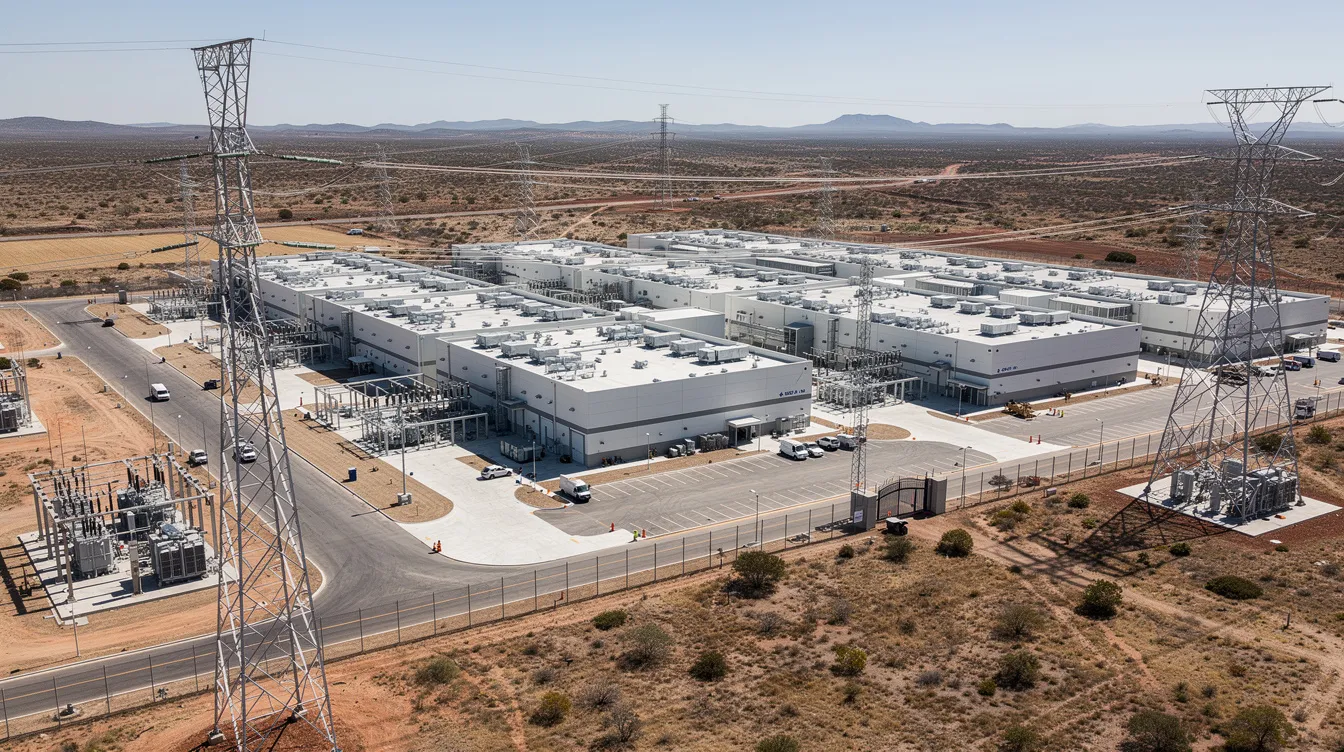
Data centers require substantial energy resources for operations. A single hyperscale campus can draw 50 to 500+ MW, and regional planning now contemplates gigawatt-scale clusters to serve artificial intelligence training, cloud computing workloads, and enterprise applications.
- Data centers are massive energy consumers driving complex regulations at every level of government.
- According to Goldman Sachs, U.S. data center power demand is projected to grow from approximately 31 GW in 2025 to 66 GW by end of 2027.
- The Berkeley Lab’s 2025 update estimates that by 2030, data center electricity use will account for 11.8% of total U.S. electricity consumption, with a range of 9.5% to 15.3%.
Reliable, affordable, and increasingly low-carbon power is now the critical constraint for data center development, often more decisive than the building shell, fiber routes, or network connection needs.
The Role of Digital Infrastructure
Digital infrastructure—including data centers, long-haul fiber, edge facilities, and battery energy storage—underpins the digital economy. Energy-law fluency is now essential for data center attorneys working on these projects.
- INK™ Law is headquartered in Denver and routinely advises clients operating in power-constrained regions such as the Front Range, Texas ERCOT markets, and fast-growing Western data center corridors.
- The firm’s energy and corporate teams are built to serve sophisticated data center developers, energy companies, and investors, not one-off small real estate deals.
How a Data Center Energy Lawyer Fits Into Your Development Team
When to Engage a Data Center Energy Lawyer
A data center energy lawyer should be part of the project team before letters of intent are signed, during term sheet negotiations with utilities and power suppliers, and again at financing and offtake stages. Waiting until contracts are circulated or interconnection studies are underway means accepting terms that could have been shaped earlier, sometimes at a cost of millions in upgrade charges or years of delay.
Key Roles for Energy-Focused Counsel
Concrete roles for energy-focused counsel include:
- Advising data center developers on large-load interconnection strategy and queue positioning
- Negotiating power purchase agreements and capacity commitments with utilities and independent generators
- Coordinating with midstream and power generation developers on fuel supply, pipeline access, and dedicated generation
- Aligning energy procurement strategy with project finance requirements and lender diligence
- Structuring technology transactions, construction contracts, and commercial agreements so they reflect power and reliability obligations
INK™ Law’s energy lawyers work alongside the firm’s corporate and M&A, real estate, and technology contracting counsel. Energy, construction, and commercial deals are aligned rather than siloed. Typical clients include hyperscale-adjacent developers, build-to-suit data center developers, energy companies partnering with data centers, and investors aggregating sites or “powered land” portfolios across the data center industry.
Planning a new site or renegotiating an existing energy arrangement? Call (720) 307-2627 or contact INK™ Law online to discuss how a data center energy lawyer can de-risk your next project.
Site Selection, Land Use, and Large-Load Feasibility
For large-load users, “site selection” is really “grid selection.” Power availability is critical for data center site selection, and the interplay between land use, zoning, utilities, and transmission capacity determines whether a parcel can support the project within a commercially relevant timeline.
Zoning and Permitting
Data center projects require robust site selection and land development. Site selection involves land use analysis, zoning, and permitting. INK™ Law helps evaluate whether a site can realistically support 50 to 300+ MW of load, including review of utility planning documents, queue data, and regional resource adequacy trends. Data center site selection must address regulatory compliance and environmental standards before construction can begin. Data centers must obtain zoning approvals and environmental permits before operation, and in many cases, data centers may be required to obtain municipal permits for water use.
Water and Cooling Regulations
Legal issues in land acquisition specific to data centers include:
- Options and purchase agreements contingent on interconnection milestones
- Rights-of-way for transmission lines and substation access
- Coordination with local zoning and permitting authorities on setbacks, noise limits, and building height
- Water access and cooling regulations, which increasingly affect data centers’ operations
Grid Interconnection Agreements
Data centers face scrutiny over power and water consumption, and facilities must comply with local grid codes and reliability standards. High-load data centers require special utility arrangements for compliance, and data centers must negotiate grid interconnection agreements with local utilities before they can draw power. INK™ Law works with data center developers, landowners, and energy companies to structure site control so that power and permits are aligned with construction and financing schedules.
Power Procurement Strategy: Grid-Tied, Behind-the-Meter, and Hybrid Models
The three major power procurement models for data centers as of 2024 through 2026 are traditional utility service (including direct access or retail choice markets), behind-the-meter generation (natural gas, solar, battery), and hybrid structures combining multiple sources. Each carries a distinct risk and cost profile. Data center projects often involve behind-the-meter energy generation, particularly in regions where utility timelines cannot keep pace with developer schedules.
INK™ Law advises on choosing among utility rate tariffs, bilateral supply contracts, and private-wire or behind-the-fence arrangements depending on jurisdiction and the client’s tolerance for construction and operational risk. In vertically integrated utility states, state utility laws may restrict generation ownership or self-supply at scale, requiring creative structures such as contracts with independent power producers or joint ventures.
Power purchase agreements are critical for data center energy procurement. Key legal issues in structuring PPAs for data centers include:
- Term length: 15 to 25 years typical; match to lease and financing horizons
- Pricing: Fixed, indexed, or blended; inflation protection vs. market exposure
- Curtailment rights: Who bears curtailment cost and how price adjusts during curtailment events
- Availability guarantees: Minimum delivery thresholds and remedies for non-delivery
- Change-in-law: Risk allocation if emissions, renewable portfolio, or grid rules change mid-term
For natural gas-fueled generation and midstream infrastructure serving a data center, critical provisions include long-term firm transport, compression, and reliability allocations between the data center and energy company. For clients planning to pair data centers with renewable energy sourcing, INK™ Law coordinates PPAs, renewable energy credit (REC) strategies, and storage arrangements so that ESG goals are balanced with cost and reliability.
Interconnection, Grid Constraints, and Utility Negotiations
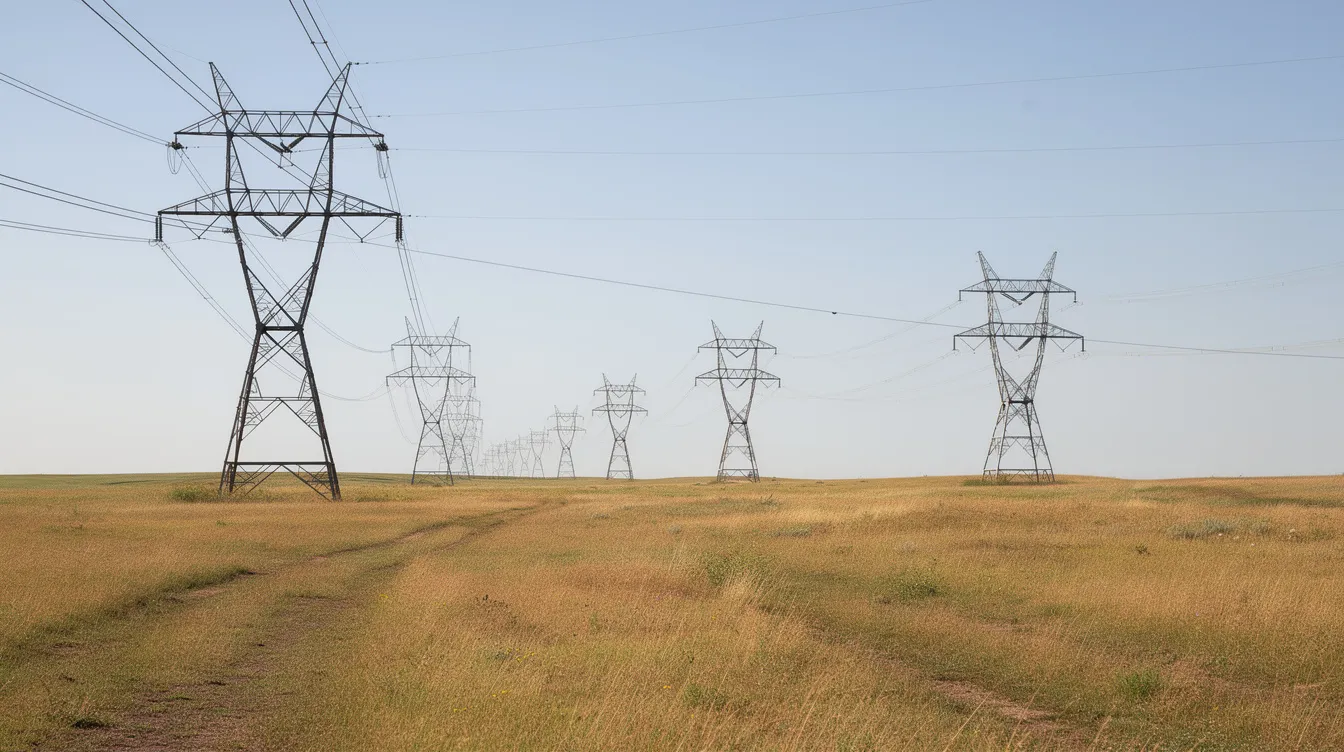
Interconnection queues in regions like ERCOT, CAISO, and Western balancing areas have become bottlenecks for large-load data centers. U.S. interconnection queues include approximately 8,200 projects totaling roughly 2,061 GW of capacity as of 2025. In ERCOT, interconnection agreements executed in 2024 amounted to over 30% of peak load. Queue position and study timelines now drive project feasibility; a generator interconnection agreement or large-load service agreement that arrives late can push an entire campus schedule by years.
INK™ Law’s role in this process includes:
- Negotiating large-load service agreements and grid interconnection arrangements with investor-owned utilities, municipal utilities, co-ops, and regional transmission organizations
- Analyzing allocation of upgrade costs: network upgrades versus direct-assign facilities, and how those cost responsibilities flow into construction contracts and financing documents
- Advising on FERC-jurisdictional interconnection issues where applicable, and on state-level public utility commission processes to secure rates or approvals
- Tracking emerging “bring, buy, or build” obligations that require data center developers to internalize generation capacity and grid infrastructure costs rather than shifting them to ratepayers
In PJM, for example, over $22 billion in transmission project costs have been advanced to serve data center-driven load growth, and Maryland customers have been assigned approximately $2 billion under current cost allocation rules. These disputes illustrate the stakes of getting cost allocation and interconnection terms right before committing capital.
Facing an interconnection delay or an adverse utility proposal? Call INK™ Law at (720) 307-2627 before accepting unfavorable terms.
Integrating Oil & Gas, Natural Gas, and Midstream Solutions for Data Centers
INK™ Law’s core energy practice in upstream oil and gas, midstream energy, and natural gas law connects directly to emerging models where data centers are co-located with gas-fired generation or sited near pipeline infrastructure. In resource-rich plays across the Rocky Mountain basins, Permian-adjacent areas, and Oklahoma, operators are evaluating how stranded or underutilized gas and midstream assets can be monetized through partnerships with data center developers.

The firm structures long-term natural gas supply and transportation arrangements for data centers using dedicated generation, including firm transport, balancing, and operational flexibility provisions. Legal issues in co-developing data centers and midstream infrastructure include easements and rights-of-way, joint development agreements, farmout-like arrangements for energy assets, and allocation of construction risks between the energy company and the data center developer.
For energy companies and operators, data center partnerships represent a new revenue stream. INK™ Law blends energy M&A, energy joint venture, and project contracting experience to structure these transactions. The firm frequently represents operators and investors in Colorado, Wyoming, Texas, North Dakota, and Oklahoma where this oil and gas to data center convergence is most active.
Renewable Energy, Battery Storage, and ESG-Aligned Digital Infrastructure
Hyperscalers, cloud providers, and enterprise users increasingly require renewable energy or low-carbon power for data centers, often with public ESG commitments and dated targets such as 2030 or 2040 net-zero goals. Companies must track and report Scope 1 and Scope 2 greenhouse gas emissions, and data centers are under scrutiny for their carbon footprints and energy use.
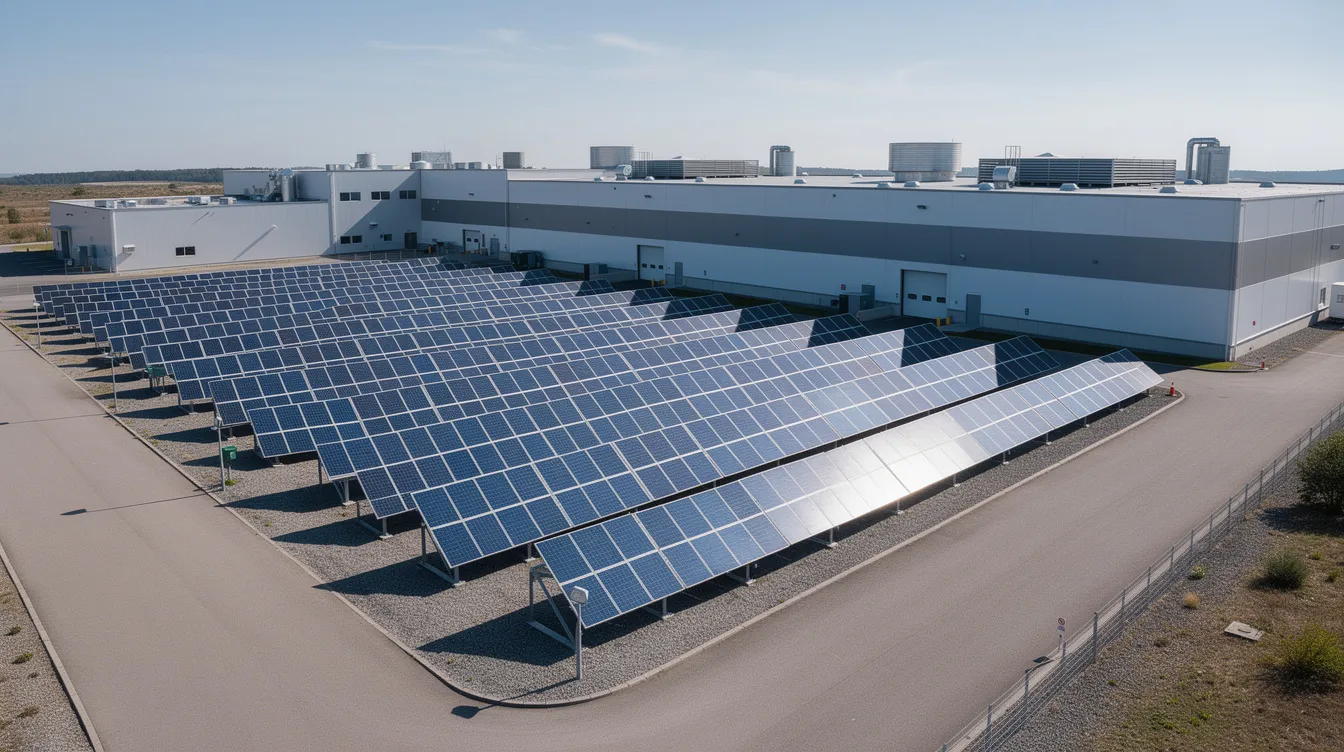
INK™ Law works on renewable energy project structures (solar, wind, and battery energy storage) and pairs these contractually with data centers through physical or virtual PPAs and capacity arrangements. Legal and commercial issues unique to pairing storage with data centers include dispatch rights, round-trip efficiency, degradation allocation, and performance guarantees tied to uptime requirements.
Tax credits are crucial for digital infrastructure projects. Developers can negotiate property tax abatements for data centers, and investment tax credits support energy-efficient installations in data centers. Tax increment financing can enhance data center project economics, and federal, state, and local tax incentives improve project feasibility. Data centers increasingly integrate with local energy resources via state policies that incentivize renewable development.
INK™ Law’s energy and corporate teams regularly advise on ESG disclosures, sustainability-linked financing covenants, and risk allocation around evolving environmental regulations impacting power plants serving data centers.
Construction Contracts and Large-Scale EPC & Equipment Agreements
Energy supply is only half the equation. Data centers also require sophisticated construction contracts for the facility itself, associated substations, transmission lines, and on-site generation. These are typically structured as EPC or design-build agreements and often run to hundreds of millions of dollars per phase.
Key construction-contract issues for data centers:
- Schedule guarantees tied to utility milestones and interconnection dates
- Liquidated damages for delay, calibrated to the revenue lost from each day a facility sits idle
- Interface agreements between the data center general contractor and energy-side contractors (substation, generation, pipeline)
- Risk allocation for high-value electrical equipment (transformers, switchgear, UPS, battery systems) with manufacturing lead times that can exceed 18 months
INK™ Law drafts and negotiates construction contracts and major equipment purchase agreements so they align with the underlying power arrangements. Failures or delays in one layer (e.g., a transformer delivery slip) must be addressed consistently across the documentation suite, including the construction loans, the PPA, and the interconnection agreement. Developers and energy companies benefit from involving counsel early when preparing RFPs, bid packages, and contract templates so the commercial and legal structure is cohesive from the outset.
Corporate Structuring, Joint Ventures, and Data Center M&A
Sophisticated data center projects often involve complex ownership structures: joint ventures between data center developers and energy companies, special-purpose entities for individual campuses, and holding companies aggregating multiple development sites. Governance disputes over “who controls the megawatts” have become a recurring source of friction in these arrangements.
INK™ Law’s corporate and M&A capabilities cover:
- Structuring joint ventures for co-developed power and data centers, including governance thresholds for power procurement decisions and deadlock resolution
- Sale-leaseback transactions for data center campuses
- Portfolio-level acquisition or disposition of operating data centers
- Investor-facing mechanics: protective provisions for capital providers, waterfall and distribution structures, and exit rights aligned with anticipated sale or recapitalization
The firm’s securities and finance practice supports private placements, structured capital, and other funding strategies commonly used by digital infrastructure sponsors and energy developers. Representing clients across multiple jurisdictions, INK™ Law can coordinate cross-border and multi-state deal structures for operators expanding their footprints.
Considering a strategic combination, divestiture, or new JV? Call (720) 307-2627 or reach out online to explore transaction structures.
Project Finance, Energy Finance, and Capital Stack Design
Data centers and associated energy infrastructure (generation, storage, midstream) are capital-intensive, often financed through a mix of construction loans, term loans, equity, and sometimes project bonds or tax equity for renewables. INK™ Law’s corporate finance and energy finance lawyers help design a capital stack that reflects the unique risk profile of data center power arrangements, including contracted versus merchant exposure and creditworthiness of offtakers.
The firm negotiates term sheets, credit agreements, and security packages where lenders must be comfortable with interconnection status, PPA terms, and construction-contract risk allocation. Energy contracts, real estate security, and corporate covenants are coordinated so that financing documents do not inadvertently restrict needed flexibility for expansion phases, load ramps, or technology upgrades. INK™ Law has worked on complex financings and is comfortable interfacing with sponsors, banks, private credit funds, and energy private equity investors across multiple jurisdictions.
Regulatory Compliance, Permitting, and Government Relations Context
Data centers are subject to complex energy regulations affecting their operations, and regulatory compliance involves overlapping rules at multiple government levels.
- Data centers must comply with overlapping federal, state, and local requirements, with energy regulation shaping power supply and infrastructure development through utility proceedings, interconnection requirements, and related oversight.
- Data centers require compliance with federal and state environmental regulations. Environmental permitting includes air, water, and waste management regulations, and data center projects often navigate NEPA requirements for environmental compliance.
- Environmental laws require data centers to comply with the Clean Air Act; for example, Amazon’s plan for 649 diesel backup generators at a North Carolina data center faced legal challenge over whether the installation should be permitted as a single major source under the Clean Air Act rather than under minor-source permits.
Backup power systems trigger environmental permitting rules. Data center development requires navigating complex permitting processes, and regulatory compliance includes managing risks across multiple jurisdictions.
- Individual states enforce distinct renewable portfolio standards and zoning restrictions, and compliance relies on a patchwork of state, local, and grid-level mandates.
- Jurisdictions impose strict energy efficiency mandates on data centers, and energy-efficient practices are becoming essential for data centers.
- Power Usage Effectiveness is a benchmark for measuring energy efficiency in data centers, and data centers are required to report energy consumption and emissions.
Over 3,000 MW of new power generation capacity is being developed across the U.S. to serve data center demand. Over 3,000 MW of new power generation capacity is under development. Babst Calland is guiding over 3,000 MW of new power generation capacity. Husch Blackwell advises on energy regulatory and procurement issues. Law firms assist data centers with compliance and sustainability reporting obligations.
INK™ Law embeds regulatory diligence into project structuring from day one so that permitting and compliance do not become last-minute gatekeepers to construction or financing. While INK™ Law is not a lobbying firm, the team understands the legislative and policy landscape for energy infrastructure and can coordinate with government-relations professionals on issues like data center moratoria, air emissions standards, or water-use regulation at federal, state, and local levels.
Uncertain about the permitting or energy regulatory path for your project? Call (720) 307-2627 or use INK™ Law’s online contact form to discuss your situation early.
Data Privacy, Cybersecurity, and Technology Transactions Interface
While INK™ Law’s focus on this page is energy and infrastructure for data centers, the firm’s broader practice also supports critical adjacent issues like technology transactions and intellectual property. Data center development and operation involve complex technology and services agreements: colocation and hosting agreements, network and fiber contracts, software licensing, and outsourcing arrangements that must be consistent with uptime and power obligations.
The firm’s IP and technology lawyers coordinate on data privacy and data security provisions in commercial agreements, ensuring that service commitments and liability caps align with the facility’s energy and reliability profile. INK™ Law provides integrated counsel so that infrastructure contracts, data privacy requirements, and technology deals are not negotiated in isolation, reducing the risk of conflicting obligations.
Dispute Avoidance and Commercial Litigation Backup
The most common disputes in data center and energy projects include construction delays, interconnection shortfalls, energy delivery failures, curtailment disputes, and disagreements over change orders or capacity upgrades. INK™ Law’s commercial litigation team drafts contracts with litigation realities in mind: clear remedies, well-defined milestones, and dispute-resolution mechanisms that protect project value.
Tools the firm uses to resolve technical energy and infrastructure disputes include stepped negotiation, expert determination, mediation, and arbitration. While the goal is always dispute avoidance through careful structuring and documentation, INK™ Law is prepared to litigate when counterparties do not perform, including in forums across Colorado, Texas, and other key energy and data center markets.
Why Data Center Developers and Energy Companies Choose INK™ Law
INK™ Law’s differentiators for data center and digital infrastructure work are specific: deep energy industry roots spanning upstream oil and gas, midstream, and renewables; transactional experience in corporate finance, M&A, and securities; and a business-minded approach tailored to data center development rather than generic real estate practice.
The firm’s strengths include:
- Experience with natural gas and pipeline agreements, renewable energy projects, and energy joint ventures
- Representing clients in Denver, Houston, Phoenix, Salt Lake City, Los Angeles, and throughout Colorado, Arizona, Utah, Wyoming, Texas, North Dakota, and Oklahoma
- Strategic counsel that treats energy, land, financing, and regulatory compliance as a single integrated project risk, not separate workstreams
- A “protector and partner” ethos focused on long-term relationships with developers, operators, and investors
INK™ Law serves as a trusted partner for sophisticated projects where power, capital, and regulatory risk intersect. The firm provides the full spectrum of legal solutions needed to ensure compliance, mitigate risks, and close transactions on terms that protect the client’s interests.
Ready to start? Schedule a strategy call for your next data center or digital infrastructure project by calling (720) 307-2627 or messaging the firm online.
Frequently Asked Questions About Data Center Energy Counsel
When should we bring a data center energy lawyer into our project?
The ideal time is before committing to a site or signing binding LOIs with utilities or power suppliers. Energy constraints, interconnection risks, and regulatory hurdles should shape site selection and deal structure, not be discovered after commitments are made. INK™ Law can also step in midstream to troubleshoot stalled interconnections, renegotiate unfavorable PPAs, or support refinancing or sale of partially developed projects. As a general benchmark, helping clients navigate interconnection queue data and utility tariff structures before signing term sheets avoids the most common sources of cost overruns.
Do you only work on projects in Colorado?
No. Although INK™ Law is based in Denver, the firm represents clients across the United States, with a particular concentration in Colorado, Arizona, Utah, Wyoming, Texas, North Dakota, and Oklahoma. The team works with local counsel, utilities, and regulators as needed in other jurisdictions for data centers and digital infrastructure projects. INK™ Law also advises clients in markets like Northern Virginia, where data center growth is concentrated, through coordinated engagement with local co-counsel.
Can you help both data center developers and energy companies?
INK™ Law routinely represents data center developers, energy companies and operators, midstream providers, and investors. The firm structures engagements to avoid conflicts and ensure clear alignment of interests. It often helps energy companies evaluate partnerships with data centers to monetize gas, midstream assets, or renewable energy projects, as well as advising developers on sourcing power from those same entities.
What project sizes do you typically handle?
The firm focuses on large-load and high-value projects: multi-megawatt campuses, hyperscale-oriented sites, and energy infrastructure pairings (power generation, storage, or pipelines). Whether a project is greenfield, expansion of an existing campus, or acquisition of a powered site, INK™ Law tailors its involvement to the commercial stakes and complexity of the energy and financing arrangements.
How do we get started with INK™ Law on a data center or digital infrastructure project?
Prepare a brief summary of your project: location, anticipated data center load, timing, key contacts and counterparties involved, and the current status of interconnection and permitting. Then call INK™ Law at (720) 307-2627 or send a detailed message through the firm’s online contact form so the team can assess fit and map out next legal steps.