
Navigating Energy Projects: The Role of an Energy Real Estate Lawyer
This page explains how energy real estate lawyers support developers, operators, and investors in securing land rights, navigating regulations, and ensuring project financeability for energy projects. The scope of this page covers key topics such as site control, ground leases, easements, development rights, land use, zoning, title and survey due diligence, environmental and regulatory compliance, construction and interconnection contracts, project financing, joint ventures, and dispute resolution. The target audience includes energy developers, operators, and investors involved in renewable energy, oil and gas, midstream infrastructure, battery storage, carbon capture, and emerging energy technologies.
An energy real estate lawyer navigates both traditional real property law and the energy sector, handling legal matters related to land rights, site control, and project development for energy facilities. Legal expertise in energy real estate is critical for project success because it ensures that land rights are secure, regulatory requirements are met, and projects are structured to be financeable and operational.
Energy projects often require large areas of land and complex infrastructure – and the real estate work behind them is anything but standard. An energy real estate lawyer navigates traditional real property law and the energy sector simultaneously, handling everything from multi-parcel site assemblies to pipeline corridors that cross dozens of tracts. At INK™ Law, we structure the land rights that make energy projects buildable, financeable, and operational across Colorado, Texas, Wyoming, North Dakota, Oklahoma, Utah, Arizona, and beyond.
Key Takeaways
- INK™ Law helps energy developers, operators, and investors secure and protect critical real estate rights – site control, ground leases, easements, and development rights – for renewable energy projects, oil and gas facilities, midstream infrastructure, battery storage projects, carbon capture installations, and emerging technologies including hydrogen and nuclear energy adjunct facilities.
- We integrate energy law, real estate, corporate, and project financing capabilities so that every land instrument we draft is aligned with the commercial deal, the permitting timeline, and the capital structure behind it.
- Early engagement at the LOI, term-sheet, or pre-survey stage allows us to catch title defects, environmental compliance gaps, and regulatory compliance issues before they derail financing or delay renewable energy tax credits and other financial incentives.
- Our attorneys draft and negotiate leases, easements, construction contracts, joint venture documentation, and power purchase agreements in plain English, with a deal-focused approach that keeps projects on schedule.
- Ready to discuss your project? Call INK™ Law at (720) 307-2627 or message us online to schedule a strategy call about your current or planned energy project sites.
INK™ Law’s Energy Real Estate Focus and How We Work With You First
INK™ Law, headquartered in Denver, Colorado, provides energy real estate counsel for upstream oil and gas operations, midstream pipelines and terminals, renewable energy development, and energy storage systems. Our attorneys – including Patrick Ivy, whose practice spans contract negotiation, upstream and midstream energy law, real property, and secured transactions – serve energy clients ranging from developers and investors to an energy company needing coordinated real estate, finance, and regulatory support, combining deep energy sector experience with corporate and project finance capabilities to produce site-rights packages that satisfy lenders, tax equity investors, and regulatory authorities.
This page is for energy clients who need reliable site control for utility scale projects: solar farms, wind energy installations, battery energy storage, carbon capture facilities, processing plants, pipelines, and related infrastructure. Whether you are an independent power producer assembling 5,000 acres for a wind project in Wyoming or a midstream operator securing a 100-mile pipeline corridor in Texas, our job is to make your land position bankable.
- Geographic reach: Colorado, Texas, Wyoming, North Dakota, Oklahoma, Utah, Arizona, and energy markets nationwide including Denver, Houston, Phoenix, Salt Lake City, and Los Angeles
- Project types: Utility-scale solar, onshore wind, battery storage, oil and gas E&P, midstream gathering and transmission, carbon capture and sequestration, hydrogen, biomass projects, community solar projects, and hybrid co-located facilities
- Client profiles: Project developers, private equity funds, operators, utilities, independent power producers, landowner aggregators, and energy procurement teams
Call INK™ Law at (720) 307-2627 or contact us online for a no-nonsense review of your current land position and documentation.
Site Control for Energy Projects: Options, Leases, and Development Rights
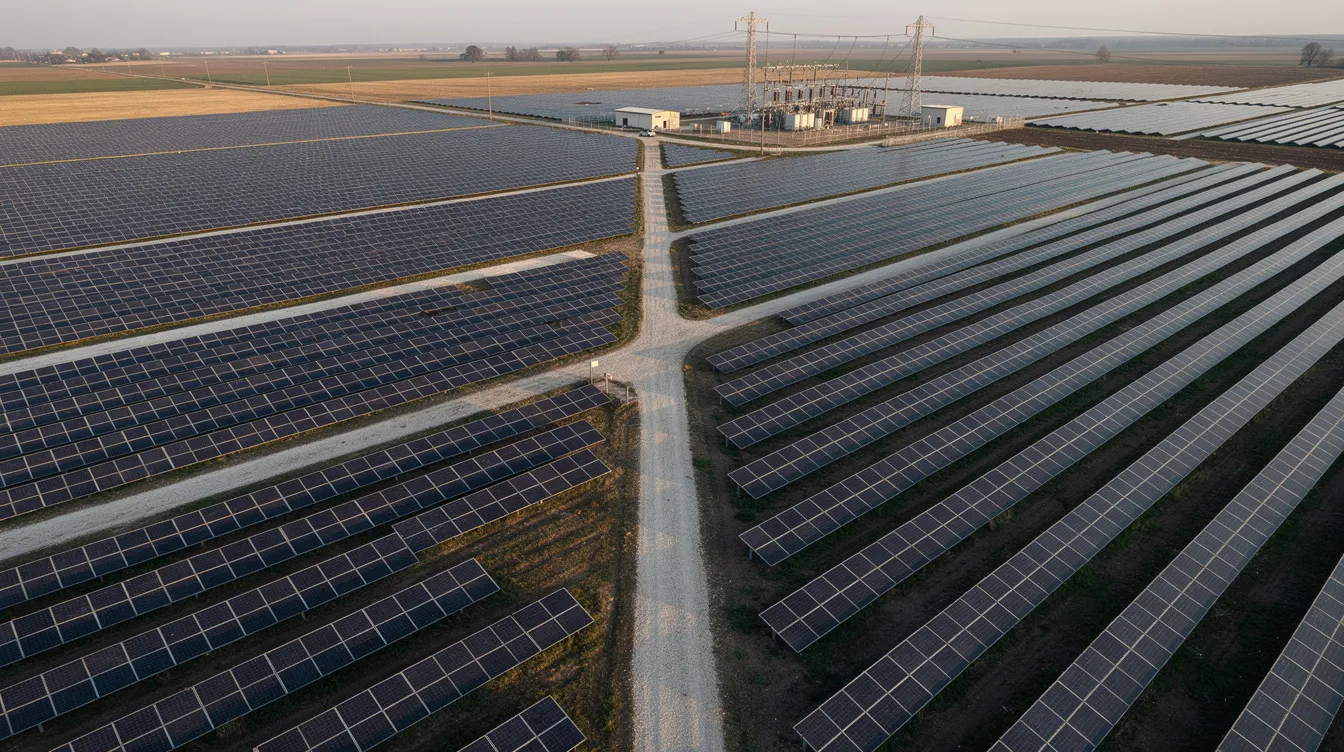
Site control is the bundle of legal rights – leases, options, easements, licenses, and purchase agreements – that allow an energy project to be permitted, financed, built, and operated. Without clear site control, no serious lender or equity sponsor will commit capital, and no permitting authority will grant approvals.
Energy lawyers handle land acquisition and site control for energy projects using a progression of instruments that match the project’s development stage:
- Option to lease or option to purchase agreements – these give the developer the right (not obligation) to commit after completing due diligence, environmental review, or interconnection studies. Option periods typically run one to five years, with modest payments to the landowner during this phase.
- Long-term ground leases – once the project is ready to build, options convert into recorded ground leases with 25- to 40-year initial terms and multiple renewal options. Ameresco’s Kūpono solar and battery storage project in Hawaiʻi, for example, operates on a 37-year land lease from the U.S. Navy.
- Recorded memoranda – to give public notice without disclosing sensitive financial terms, developers record a memorandum of lease or option that includes legal descriptions, capacity, and extension rights.
- Exclusive development rights agreements – these lock up acreage across multiple parcels for large-scale assemblies (a 200+ MW wind project or a 1,000-acre battery energy storage installation) and prevent competing development.
They help secure property rights and approvals needed for energy facilities at each stage. States like Texas have established a Competitive Renewable Energy Zone plan for wind power that drives site selection strategy, while programs like New York’s Climate Leadership and Community Protection Act – aiming for 76,750 MW of renewable energy by 2050 – push developers to move quickly on renewable energy siting and project development.
Investors, tax equity providers, and lenders in 2024–2026 typically require clear, recorded site control before committing to project financing. Renewable energy incentives and federal incentives tied to “placed in service” deadlines make timing critical – a gap in your site control package can cost months and millions.
Have INK™ Law stress-test your current site control documents. Call (720) 307-2627 for a targeted review focused on finance-ready documentation.
Ground Leases for Solar, Wind, Battery, and Oil & Gas Facilities
Ground leases for energy facilities are not commercial real estate leases with different names. They are highly specialized instruments that must account for equipment installation, grid interconnection, weather events, decommissioning, and decades of operational variability. Energy lawyers support utility-scale solar, wind, and energy storage projects by drafting and negotiating contracts for land use that reflect these realities.
Utility-scale solar projects range from 20 MW to over 100 MW, and the ground leases backing them must address:
| Term | What We Negotiate |
|---|---|
| Term and extensions | 20–25 year initial term plus multiple 10-year renewals (35–40+ years total) |
| Rent and royalty | Per-acre base rent, capacity payments (per MW), royalties on revenue, or hybrid structures |
| Escalation | Fixed percentage (commonly 2% per year), CPI-indexed, or negotiated step-ups |
| Acreage and capacity | Minimum and maximum footprint, right to release unused acreage, capacity caps |
| Construction and access | Staging areas, road use, temporary easements, utility connections |
| Surface restoration | Standards for grading, revegetation, and soil remediation during and after operations |
| Assignment and financing | Lender consent, non-disturbance agreements, step-in rights for tax equity investors |
| Decommissioning | Removal timelines, security bonds, financial assurance mechanisms |
| We tailor ground lease forms by state – Colorado’s mineral severance landscape requires different protective language than North Dakota’s or Texas’s – and by project type, whether that is a solar developer building a 50 MW array or an operator siting a compressor station. We regularly align ground leases with related agreements like power purchase agreements, interconnection agreements, and project financing documents so that there are no gaps between real estate rights and commercial offtake or financing terms. |
For clients with already-operating sites, we resolve landlord-tenant and surface-use conflicts through renegotiations and curative amendments. If you are dealing with legacy ground leases that do not match your current project design or financing needs, reach out through our online contact form for assistance.

Easements, Rights-of-Way, and Corridor Development for Energy Infrastructure
They negotiate easements and right-of-way agreements for energy projects ranging from single-parcel access roads to multi-state pipeline corridors. At INK™ Law, we structure permanent and temporary easements for pipelines, transmission lines, distribution lines, fiber and SCADA lines, injection wells, road access, and carbon capture and storage corridors.
Key easement terms we draft and negotiate include:
- Width and corridor rights – precise metes and bounds, buffer zones, multi-line allowances
- Multi-use and multi-product rights – oil, natural gas, CO₂, hydrogen, or electric transmission within the same corridor
- Surface and subsurface facilities – above-ground installations (meter stations, valves, markers), depth and separation requirements
- Relocation provisions – triggers, cost allocation, and timelines if infrastructure must shift
- Indemnity, insurance, and liability – environmental remediation, third-party claims, ESG-related risk allocation between operators and landowners
- Abandonment and removal – restoration obligations, timeline for equipment removal, financial assurance
Texas leads in carbon capture, utilization, and storage (CCUS) projects, and Petra Nova is the world’s largest carbon capture plant, operational since 2017. As carbon capture corridors expand, easement terms must address product type limitations, injection well access, and subsurface pore-space rights that did not exist in traditional pipeline practice. Under Texas law (Property Code Chapter 21), electric transmission ROW easements must specify width, description, exclusive versus non-exclusive rights, assignment restrictions, and restoration obligations.
Easements also intersect with environmental compliance – wetlands crossings, endangered species habitat, and cultural resource sites often impose corridor restrictions that must be reflected in the legal instrument, not just the engineering drawings.
Planning a new corridor or expansion? Call INK™ Law at (720) 307-2627 before sending land agents into the field so we can calibrate offers and forms upfront.
Land Use, Zoning, and “Right to Build” for Energy Facilities
Local zoning ordinances significantly impact renewable energy project timelines. A signed ground lease means nothing if the county denies the special use permit. Energy projects require compliance with zoning and environmental regulations at every jurisdictional level, and developers need to navigate local, state, and federal regulations simultaneously.
We coordinate with local land use counsel when necessary, but INK™ Law maintains primary responsibility for aligning site control documents, project configuration, and local approvals with the project’s commercial and technical needs. They assist in navigating local, state, and federal land use regulations across every project we touch.
Practical issues we address in 2024–2026 ordinance environments include:
- Setbacks from residences, water bodies, and roads – increasingly aggressive in western states
- Height limits for wind turbines and transmission structures
- Noise and glare standards for wind energy and solar energy installations
- Traffic and road-use agreements during construction, including bonding for road damage
- Emergency response planning requirements imposed by county or municipal authorities
- Overlay districts for wildlife habitat, scenic corridors, and conservation areas
Pennsylvania’s land use regulations vary widely by municipality, creating a patchwork that renewable energy project developers must navigate parcel by parcel. Developers need to navigate local land use regulations whether they are working in a rural Colorado county or a suburban Texas jurisdiction. We help clients engage with planning commissions, county commissions, city councils, and – where applicable – tribal and federal government land managers, as well as public agencies involved in land use approvals and infrastructure oversight.
Facing community opposition or complex zoning conditions? Contact INK™ Law for a strategic permitting and stakeholder plan.
Title, Survey, and Mineral Rights Due Diligence for Energy Projects
They conduct title examination and due diligence for energy facilities – and they mitigate risks before construction by identifying potential title defects so title and site-control legal issues can be resolved before they delay financing, permitting, or construction. At INK™ Law, this work draws on our extensive experience preparing oil and gas title opinions and curatives for multi-million-dollar asset acquisitions.
Core due diligence tasks include:
- Reviewing and certifying fee simple ownership, leaseholds, and easements
- Identifying liens, encumbrances, and restrictive covenants
- Analyzing ALTA/NSPS surveys and as-built drawings
- Confirming access routes via public or private roads
- Mapping mineral and surface estate severances – a critical issue in Texas, North Dakota, Oklahoma, and Colorado where mineral rights are frequently severed from surface estates
Conflicts between mineral estates and surface uses can disable wind turbine foundations, block solar panel arrays, or prevent battery storage installation. We use surface-use agreements and accommodation-doctrine-informed risk mitigation strategies to manage those conflicts, protecting your project from subsurface interference while respecting mineral owners’ rights under state law.
Early-stage title and survey “red flag” reviews – before large option payments, milestone payments, or construction mobilization – keep investors and lenders comfortable with the project’s real estate risk profile.
Call (720) 307-2627 for a focused title and survey risk assessment tied to your specific project timeline and financing milestones.
Environmental and Regulatory Compliance at the Site Level
Environmental compliance and regulatory compliance connect directly to real estate decisions for every energy project. Environmental permits are essential for solar project development, and the same holds for wind, storage, pipeline, and carbon capture installations.
We coordinate with environmental consultants to identify constraints – wetlands, floodplains, endangered species habitats, cultural resources, and hazardous substances – and then build those constraints into leases, easements, site plans, and construction contracts. Environmental impact reviews are required under SEQRA for projects in certain jurisdictions, and analogous state-level reviews apply across INK™ Law’s footprint. In New York, renewable energy regulations often require coordination with New York State Energy Research and Development Authority programs and similar state entities.
The Federal Energy Regulatory Commission oversees renewable energy compliance at the federal level, while federal regulations govern the development of carbon capture projects through EPA’s Class VI well program and related frameworks. Carbon capture projects require compliance with complex regulations that continue to evolve as deployment accelerates, creating broader legal and regulatory challenges when real estate, permitting, and operating requirements intersect. Pennsylvania’s AEPS supports renewable energy development through portfolio standards that affect project siting economics, and similar state renewable portfolio standards shape project viability nationwide.
Risk allocation is central to our document drafting: who bears the cost for remediation, off-site migration, decommissioning, and ESG-driven upgrades. These obligations must appear clearly in project documents and real estate covenants – ambiguity here invites litigation and can destroy project economics.
Developers with sites involving prior industrial use, Brownfields, or legacy oil and gas operations should reach out through our contact page for a site-specific environmental risk review.
Construction, Interconnection, and Site-Related Contracts
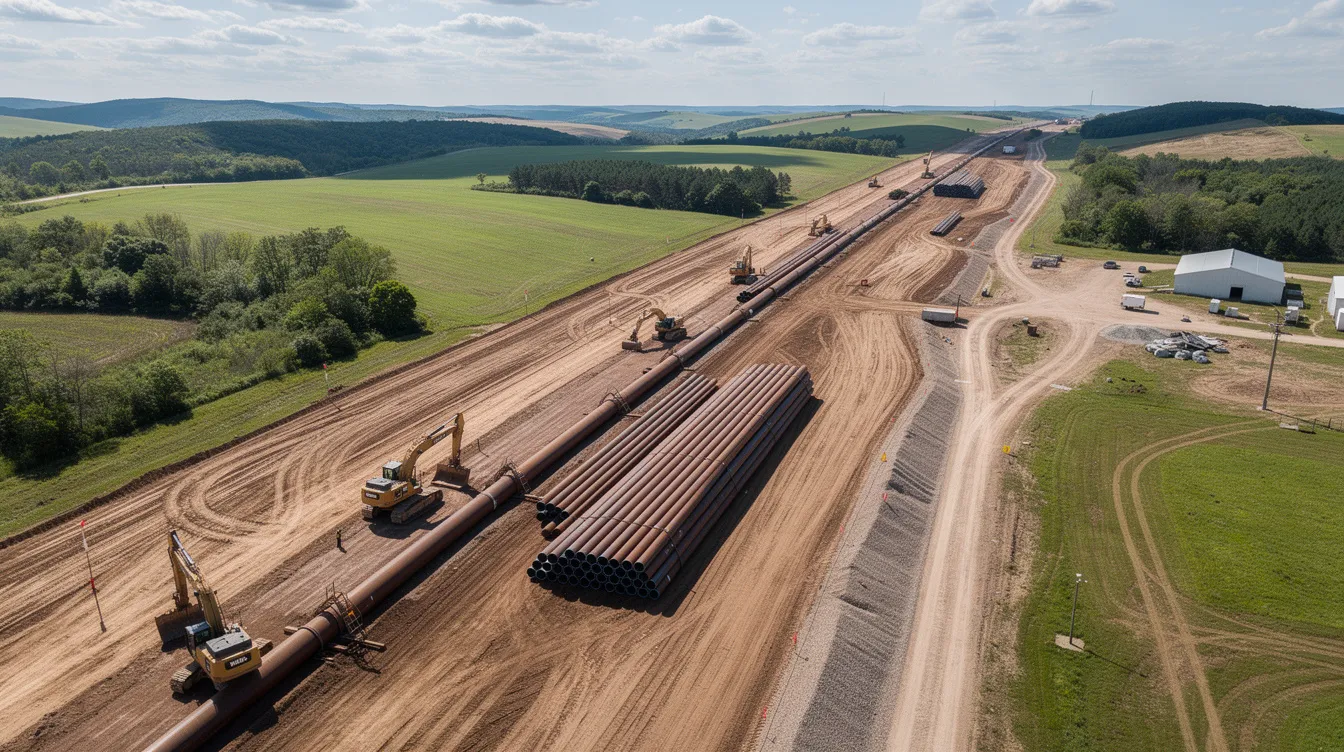
The intersection between construction contracts and real estate rights creates some of the most common – and most expensive – project failures. When contractors build outside the legally secured footprint, the result is trespass claims, stop-work orders, and delayed interconnection.
INK™ Law reviews and negotiates construction contracts and related documents to ensure they match the project’s easements, leases, and licenses. They secure transmission and interconnection rights for renewable energy sources before construction mobilizes, and we confirm that EPC agreements, balance-of-plant contracts, and civil works contracts all reference the correct legal descriptions, access corridors, and timing windows.
Common provisions we address:
- Site access and laydown areas – confirming lease or easement coverage
- Temporary construction easements – separate instruments for staging, crane paths, and material storage
- Restoration standards – post-construction grading, replanting, and road repair
- Change-order triggers – real estate constraints that alter scope or schedule
- Coordination with utilities and transmission operators for on-site and off-site interconnection work
We align construction schedules and milestone payments with permitting, title curative, and landowner consent timelines to keep project development and financing on track. Our broader practice in construction contracts, secured transactions, and commercial litigation allows us to anticipate and mitigate disputes around site conditions, delays, and damage to neighboring properties.
Financing, Tax Credits, and “Bankable” Real Estate Packages
Energy real estate work exists in service of project financing. Every lease, easement, and title opinion we produce must satisfy the scrutiny of debt facilities, tax equity, private equity, and joint venture capital structures used for renewable energy development, midstream buildouts, and storage projects.
Tax equity financing is crucial for renewable energy project funding. The Inflation Reduction Act of 2022 supports renewable energy tax credits – including production tax credits and investment tax credits – and the Inflation Reduction Act offers tax credits for renewable energy projects that meet domestic content, energy community, and low-income community requirements. Section 45Q tax credits incentivize carbon capture and storage projects, and the One Big Beautiful Bill Act modifies carbon oxide sequestration tax credits in ways that developers must track carefully. Federal and state incentives promote renewable energy facilities, but capturing those tax incentives as part of project structuring and timing requires airtight real estate documentation with clear “placed in service” timelines. In some jurisdictions, project economics also turn on real property tax law, including exemptions and PILOT-style arrangements.
Lenders and tax equity investors evaluate real estate risk through:
- Recorded site control – memoranda of lease, easement, or option on file with the county recorder
- Priority of mortgages and security interests – clean title with no senior liens that threaten the project
- Non-disturbance and attornment – agreements protecting the project if the landowner defaults on their own obligations
- Estoppels from landowners – written confirmations of lease status, rent payments, and absence of defaults
- Cure rights – lender’s ability to fix title defects or lease defaults before termination
- Long-term assignability – transferability to future sponsors, acquirers, or refinancing parties
Energy real estate lawyers assist in project financing and M&A support by delivering packages that check every one of those boxes. Firms like Hancock Estabrook provide bond counsel services for renewable energy projects, and firms like Jackson Walker have extensive experience in energy loan transactions – the energy finance market is sophisticated, and your real estate documents must meet that standard.
INK™ Law’s corporate finance and securities capabilities include experience with complex capital structures and multi-billion-dollar financing structures. We integrate those skills directly into energy project real estate structuring so that the site-rights package and the capital stack work as a single, coherent whole.
Call (720) 307-2627 to discuss whether your current site-rights package is sufficient for anticipated lenders, tax equity providers, or exit buyers.
Joint Ventures, Option Structures, and Shared Site Use
Energy projects increasingly involve joint venture structures and shared use of land and infrastructure between multiple parties. Co-located renewable energy, storage, and midstream facilities are now common – a wind developer partnering with a battery storage investor on a shared substation site, or a midstream company and carbon capture operator sharing a corridor for CO₂ and natural gas lines.
Common joint development agreements that depend on real estate rights include:
- Shared access roads and substations with reciprocal operating covenants
- Overlapping easements with non-interference provisions
- Option structures giving one party the right to add capacity or infrastructure on leased land
- Public private partnerships where federal government or state land managers control the underlying fee interest
We structure and negotiate joint venture and option agreements so they align with underlying land instruments and do not inadvertently violate exclusive use or non-interference clauses in existing leases or easements. A poorly drafted JV agreement that conflicts with a ground lease’s exclusivity clause can unravel both the deal and the financing behind it.
Exploring a joint venture or shared-site deal? Contact us online for a strategic review of how your real estate documents support – or undermine – your JV structure.
Disputes, Enforcement, and Litigation-Ready Documentation
Even well-planned energy projects face real estate disputes: surface damage claims, access obstruction, trespass allegations, royalty and rent disagreements, title challenges, and condemnation or regulatory takings issues. Energy real estate lawyers assist with risk mitigation and dispute resolution by building enforcement mechanisms into every document from the start.
Our commercial litigation experience informs the way we draft leases, easements, licenses, and construction contracts. We aim to prevent disputes through clarity, but we prepare for them through:
- Detailed exhibits and maps tied to surveyed legal descriptions
- Clear construction corridors and timing windows
- Notice and cure procedures with specific deadlines
- Indemnity and insurance allocations matched to actual project risks
- Step-down dispute escalation: negotiation → mediation → arbitration or litigation
If a dispute arises over energy real estate, INK™ Law can support negotiation, settlement, and – when necessary – aggressive litigation to protect project value.
Facing an active dispute with a landowner, neighbor, or counterparty? Call (720) 307-2627 for a confidential assessment of your options and an honest view of risks and likely outcomes.
How INK™ Law Integrates Real Estate With Energy, Corporate, and IP Strategy
Energy real estate lawyers often work as part of a multidisciplinary team, and at INK™ Law, that integration is built into how we operate alongside broader project teams that may also include renewable energy lawyers. We connect energy real estate services with our broader practice in energy law, corporate and business law, mergers and acquisitions, securities and finance, and intellectual property.
We often serve as outside general counsel to energy companies, including solar companies, advising on how site control fits with regulatory compliance, corporate governance, IP protection for proprietary technology, and financing as one cohesive strategy. They manage the project lifecycle from acquisition through decommissioning, and our role in energy M&A – acquisitions and sales of projects and portfolios – means that real estate due diligence and contract clean-up are central to successful transactions and post-closing integration.
Our process: initial strategy call, issue-spotting memo, prioritization of high-impact workstreams, and ongoing, business-friendly communication. No surprises, no jargon-heavy memos that gather dust.
Contact us online to see how an integrated legal team can support your energy project pipeline and asset portfolio.
Why Energy Developers and Investors Choose INK™ Law
What differentiates INK™ Law in the energy real estate space is the combination of deep contracts and energy experience, multi-state licensing, a deal-driven mindset, and transparent communication.
- Attorney depth: Patrick Ivy’s practice spans upstream and midstream assets, title opinions, easements, lease agreements, and complex contract negotiation across Texas, Colorado, North Dakota, and Wyoming. The broader INK™ Law energy group covers oil and gas, natural gas, renewable energy, carbon capture, and battery storage.
- No handshake deals: We do not support informal arrangements for high-value energy related projects. Every deal gets documented with precision.
- Market familiarity: Denver, Houston, Phoenix, Salt Lake City, Los Angeles, and key basins and corridors in the Rockies, Permian, Bakken, and mid-continent.
- Plain language: We speak in practical, business-oriented terms. If we cannot explain our recommendation in one paragraph, we rethink the recommendation.
Call (720) 307-2627 to see whether INK™ Law is the right strategic partner for your portfolio of energy projects.
Getting Started With INK™ Law on Your Energy Real Estate Needs
New clients typically engage with us through a straightforward process:
- Confidential intake – project overview, location, development stage, key deadlines
- Document review – existing leases, easements, title reports, surveys, interconnection agreements, and term sheets
- Gap identification – immediate project-threatening issues flagged within the first review cycle
- Prioritized action plan – aligned with upcoming development milestones, financing closes, or permit hearings
We can step in at any stage: early prospecting and LOI phase, pre-financing “shovel-ready” push, acquisition of an in-development project, or operational optimization and refinancing. Before your first call, gather key documents – site maps, title work, existing agreements, term sheets – so the conversation is as productive as possible.
Call (720) 307-2627 or message us online to schedule a focused strategy session about your current or planned energy projects.
Frequently Asked Questions: Energy Real Estate and Site Control
When should I involve an energy real estate lawyer in my project?
The best time is before signing term sheets with landowners or counterparties – ideally at the site selection and LOI stage. When option agreements, ground leases, and solar lease agreements are structured correctly from the outset, you avoid the expensive re-work that comes from discovering title defects, missing easement rights, or zoning conflicts after you have already committed capital. Early involvement by lead counsel with energy real estate experience pays for itself many times over.
Can INK™ Law help if my project already has signed leases and easements?
Yes. We frequently step into ongoing projects to review existing documents, identify gaps that may concern lenders or investors, negotiate amendments and curatives, and align legacy contracts with current project design and financing structures. Many renewable energy clients come to us mid-development when a lender flags an issue with their site control package – we can assist clients in getting those documents to a bankable state efficiently.
Do you only handle renewable energy projects, or also oil and gas and midstream?
INK™ Law handles a full spectrum of energy projects: renewable energy generation (solar, wind, battery, carbon capture), oil and gas exploration and production, midstream pipelines and storage, and hybrid or transition projects. We also assist developers working on wind power projects, solar power projects, and energy efficiency installations. Our focus is always on commercial and transactional work for the energy sector.
What information should I share for an initial consultation?
Bring or send basic project details (location, state, project type and size, development stage), key documents (LOIs, leases, easements, title work, surveys, major contracts), and upcoming deadlines (permit hearings, financing dates, construction start). The more context you provide, the more concrete and tailored our initial guidance will be.
How do I start working with INK™ Law on my energy sites?
Call INK™ Law at (720) 307-2627 or use the online contact form to request a consultation. After our initial conversation, we will confirm scope, timing, and a clear engagement structure aligned with your project and budget. Every project is different, and personalized advice is available by contacting INK™ Law directly.