
LNG Lawyer: Structuring Supply, Infrastructure, Transportation, and Commercial Agreements
Looking for an LNG lawyer? INK™ Law specializes in LNG transactions and regulatory matters.
Introduction: Who Needs LNG Legal Services and Why?
This page is designed for energy companies, investors, project developers, utilities, commodity traders, and renewable energy developers who are involved in the U.S. LNG (liquefied natural gas) sector. Understanding LNG legal services is crucial for these stakeholders because LNG projects require complex structuring, negotiation, and compliance across multiple legal domains. The right legal guidance ensures that transactions are bankable, regulatory risks are managed, and commercial interests are protected throughout the LNG value chain—from upstream extraction to downstream marketing.
INK™ Law helps energy companies, investors, and renewable energy developers structure, negotiate, and close complex LNG transactions across U.S. energy markets. This page covers LNG supply, liquefaction, storage, transportation, regasification, and downstream marketing agreements, including the interfaces between natural gas and natural gas liquids.
Key Takeaways
- INK™ Law combines energy law depth with corporate, M&A, securities, and project finance capabilities to support LNG projects from concept through commercial operation.
- The firm structures and negotiates sale and purchase agreements (SPAs), gas supply agreements (GSAs), tolling arrangements, charterparties, terminal capacity contracts, joint ventures, and financing documents for LNG and gas-sector clients.
- INK™ Law is headquartered in Denver and regularly serves LNG and gas market industry participants in Colorado, Texas, Wyoming, North Dakota, Oklahoma, Arizona, Utah, and major hubs like Denver, Houston, Phoenix, Salt Lake City, and Los Angeles.
- The firm represents clients across the full LNG value chain: exploration and production companies, midstream operators, terminal developers, commodity traders, private equity and infrastructure funds, utilities, and energy developers integrating gas into renewable portfolios.
- Call (720) 307-2627 or message INK™ Law online for an LNG-focused strategy session.
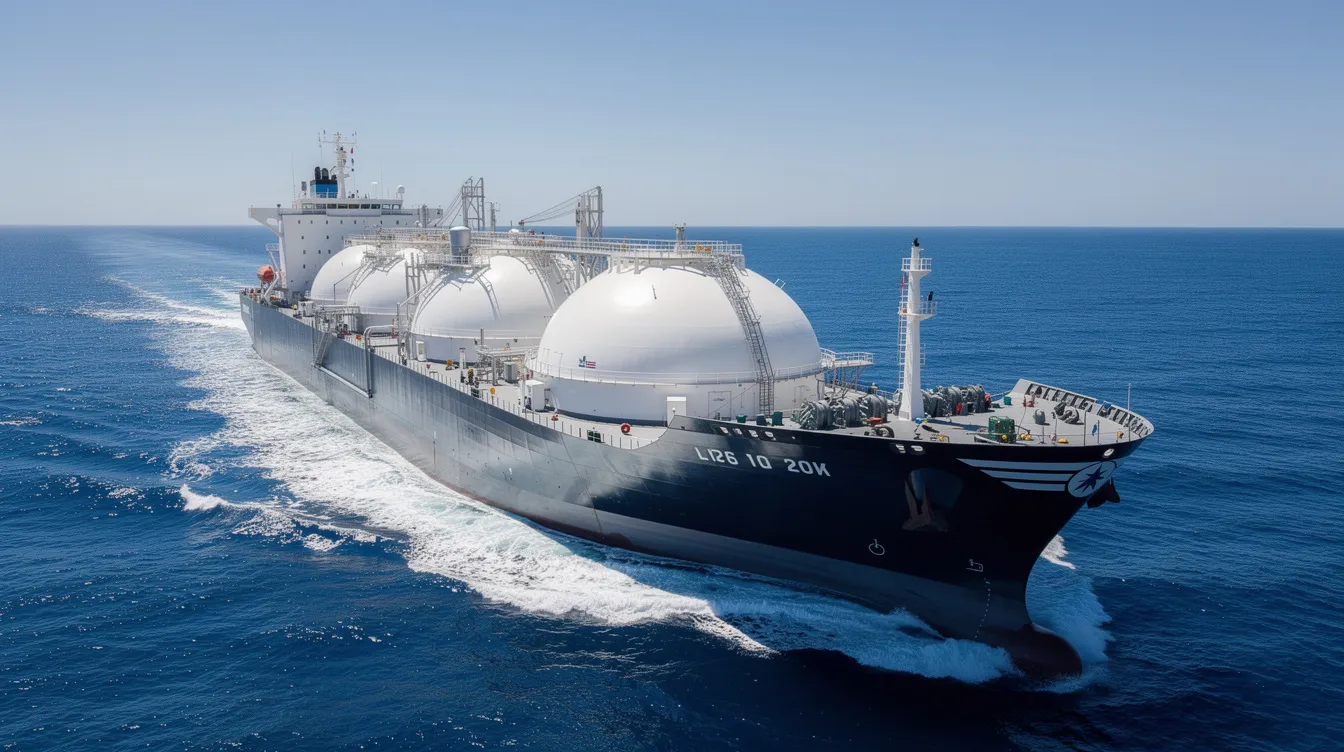
What an LNG Lawyer Does in Today’s Energy Markets
What Is an LNG Lawyer?
A lawyer specializing in LNG law navigates a cross-border niche within energy and maritime law. An LNG lawyer is a legal professional who focuses on the structuring, negotiation, and execution of contracts and regulatory compliance for LNG projects. This includes handling the legal aspects of upstream extraction, liquefaction, midstream shipping, and downstream trading. Each stage of the LNG value chain—upstream extraction, liquefaction, midstream shipping, and downstream trading—requires careful legal coordination to ensure commercial and regulatory alignment.
The Role of an LNG Lawyer
Liquefied natural gas is natural gas cooled to approximately -162°C for transport by vessel, enabling volumes to reach buyers across oceans and continents. The U.S. exported roughly 111 million metric tonnes of LNG in 2025, up from 88.4 million in 2024, making it the first country to cross the 100 million tonne threshold in a single year. Each tonne shipped requires a web of contracts, permits, corporate structures, and financing arrangements that demand precise legal work.
At INK™ Law, an LNG lawyer sits at the intersection of natural gas, natural gas liquids, midstream infrastructure, shipping, project finance, and long-term offtake agreements. LNG lawyers handle upstream extraction, liquefaction, midstream shipping, and downstream trading; the practice touches every link in the chain from wellhead to burner tip.
Why LNG Lawyers Need Multidisciplinary Expertise
LNG lawyers need to understand various legal domains such as maritime law, environmental law, and project finance. This multidisciplinary expertise is essential because LNG projects involve cross-border shipping, environmental permitting, and complex financing structures. Without a working knowledge of these areas, lawyers may overlook critical risks or fail to secure necessary approvals.
Regulatory Compliance and Project Development
An LNG lawyer plays a crucial role in helping businesses manage regulatory compliance and project development. Understanding LNG technology and economics is important for effective legal guidance, because a lawyer who cannot read a heat-rate curve or a boil-off specification will miss risk that belongs in the contract. Qualifying as an LNG lawyer often requires a Juris Doctor and relevant bar admission, but the distinguishing factor is hands-on transactional and regulatory experience across many types of energy agreements.
INK™ Law acts as outside general counsel for LNG market participants, coordinating corporate, regulatory, real estate, and commercial contract issues under a single, integrated strategy. Call (720) 307-2627 to discuss a specific LNG project, proposed transaction, or dispute risk.
INK™ Law’s LNG and Natural Gas Capabilities
Overview of LNG Legal Services
INK™ Law’s Strategic Energy Law practice serves as the umbrella for the firm’s LNG services. The practice covers upstream, midstream, refining, renewables, and clean energy, with attorneys who understand how each segment feeds into or draws from LNG value chains.
Key LNG-Related Capabilities
Key LNG-related capabilities include:
- Upstream gas supply and gathering agreements
- Liquefaction tolling agreements
- Terminal and storage contracts
- Shipping and charterparty negotiations
- Regasification and capacity rights
- Downstream gas sales, hedging documentation, and procurement of firm supply
Multidisciplinary Legal Knowledge
LNG lawyers need to understand various legal domains such as maritime law, environmental law, and project finance. LNG commercial lawyers must address safety compliance, environmental approvals, and project financing. INK™ Law’s complementary practice strengths cover these aspects:
- Corporate and business law
- Mergers and acquisitions
- Securities and finance
- Real estate
- Commercial litigation if a deal later ends up in dispute
The firm structures deals for E&P companies, midstream operators, LNG terminal developers, traders, private equity funds, and renewable energy developers using gas as a firming resource. INK™ Law’s energy attorneys are familiar with federal and state regulatory overlays governing natural gas infrastructure, including FERC, Energy Department, and state utility commission issues that impact LNG value chains.
Structuring LNG Supply and Offtake Agreements
Importance of Supply and Offtake Agreements
Supply and offtake agreements are the commercial backbone of every LNG project. They largely determine bankability, return on investment, and whether lenders will commit capital. In 2025, U.S. developers signed SPAs covering approximately 40 million tons per annum (Mtpa), roughly 5.2 Bcf/d, the highest volume since 2022. Over 90% of those volumes were under 20-year-term contracts.
Types of LNG Contracts
Complex contracts are crucial in LNG business models that rely on sale and purchase agreements. Long-term sale and purchase agreements are vital in LNG transactions to define pricing and delivery obligations. INK™ Law assists with:
- Long-term SPAs and master LNG sale and purchase agreements
- Gas supply agreements feeding liquefaction facilities
- Short-term and spot contracts for portfolio optimization
Key Commercial Terms and Risk Allocation
Key commercial terms in every SPA negotiation include:
- Contract quantity and flexibility
- Pricing formulas and indices
- Destination flexibility
- Quality specifications
- Lifting schedules
Pricing is shifting: about 56% of 2025 SPA volumes were tied to the U.S. Henry Hub benchmark, down from 67% in 2024. The remainder used hybrid formulas, oil-linked indices (including crude oil references), or other regional benchmarks.
Risk allocation provisions require careful drafting. Take-or-pay and ship-or-pay obligations protect sellers and lenders but can expose buyers to volume risk if demand drops. Force majeure clauses in LNG contracts define parameters for supply disruptions, including hurricanes, equipment failures, or sanctions. INK™ Law also negotiates:
- Curtailment rights
- Failure-to-deliver remedies
- Credit support (letters of credit, parent guarantees)
- Price re-opener mechanisms
These SPA structures connect directly to joint-venture and financing work. See the firm’s Energy Finance Lawyer and Energy Joint Venture Lawyer pages for more on how offtake contracts interact with capital commitments.
LNG Infrastructure: Terminals, Pipelines, and Storage
Infrastructure Stack and Project Financing
LNG projects require a coordinated infrastructure stack: feed gas pipelines, liquefaction plants, cryogenic storage tanks, marine berths, and regasification terminals. Each facility involves construction contracts, engineering specifications, capacity reservation arrangements, and environmental permits. LNG projects typically require extensive infrastructure development and project financing to bring these facilities online.
Negotiating Infrastructure Agreements
INK™ Law helps clients evaluate and negotiate midstream and LNG infrastructure agreements, including expansion and capacity reservation arrangements. The firm’s Midstream Energy Lawyer practice covers pipeline easements, terminal access, and storage contracts.
Recent Project Examples and Land Use Issues
Recent U.S. projects illustrate the scale of capital at stake. Commonwealth LNG in Louisiana secured approximately $9.75 billion in project financing from institutional investors including Mubadala, CPP Investment Board, and BlackRock. Delfin’s floating LNG export project reached a $5 billion final investment decision in June 2026, targeting 4.4 million metric tons per year of capacity by 2030. LNG projects require sophisticated project financing and corporate structuring for infrastructure development of this magnitude.
Land use, easements, and right-of-way issues directly affect LNG infrastructure siting and expansion. INK™ Law addresses these through its Pipeline Easement Lawyer and Energy Real Estate Lawyer services. Environmental, safety, and local permitting concerns add time and cost to terminal development. Procurement of materials and skilled labor, along with coordination among contractors, are persistent operational challenges that must be reflected in EPC agreements.
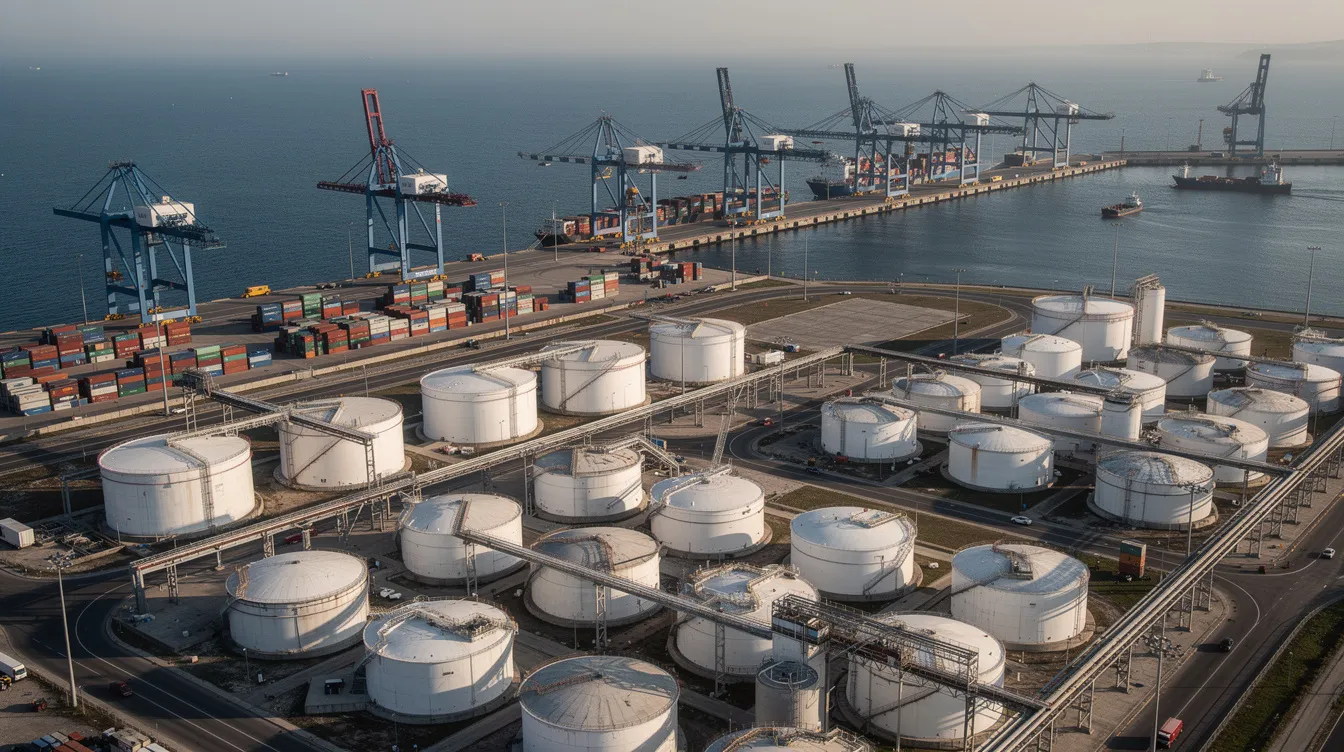
Transportation, Shipping, and Charterparty Agreements
LNG Transportation Risks and Contract Coordination
LNG transportation involves specialized vessels, complex scheduling, and counterparty and geopolitical risk. A single cargo of LNG on a Q-Max carrier can be worth over $50 million depending on market conditions, and delays measured in hours translate into real financial exposure.
INK™ Law coordinates LNG shipping contracts, including charterparty agreements, with upstream supply contracts and downstream offtake obligations. The goal is to avoid mismatched liabilities where, for example, a buyer must pay demurrage at a congested terminal while also incurring take-or-pay charges under a separate SPA.
Key Contract Issues in LNG Shipping
Key contract issues in LNG shipping include:
- Demurrage and laytime: Specifying allowed loading and unloading time, with escalating penalties for delays
- Scheduling windows: Coordinating cargo lifting with terminal availability and vessel routing
- Boil-off gas risk: Allocating losses from natural gas evaporation during transit (typically 0.1%-0.15% per day)
- Title and risk transfer: Defining the precise point (usually the ship’s manifold flange at the loading terminal) where ownership passes
- Insurance and sanctions compliance: Ensuring coverage and routing comply with international sanctions regimes
Shipping terms interact with marine terminals, storage rights, and regional energy markets that may experience congestion or storm-related disruptions, especially along the U.S. Gulf Coast. Careful contract drafting mitigates these risks for project sponsors, traders, and utilities by specifying alternative delivery points, force majeure triggers, and allocation procedures during port closures.
Corporate Structuring for LNG Projects and Joint Ventures
Project Finance and Joint Ventures
LNG projects often use multi-tiered holding companies, special purpose vehicles, and joint ventures to manage risk, tax, and control among sponsors and investors. Project finance and joint ventures are essential components in the LNG industry for large-scale investments. Rio Grande LNG’s fourth train, for instance, raised approximately $1.7 billion in equity commitments from BlackRock’s Global Infrastructure Partners, GIC, Mubadala, and TotalEnergies, all channeled through dedicated project entities.
Entity Formation and Governance
INK™ Law’s corporate and business law team designs LLCs, partnerships, and corporate structures tailored to LNG project ownership and governance. The firm’s Energy Company Formation Lawyer practice covers entity selection, operating agreements, and governance documents for energy projects.
Key Joint Venture Agreement Issues
Joint venture agreements in LNG require attention to:
- Voting and veto rights over capital expenditures, new SPAs, and asset dispositions
- Cash-call mechanics and consequences for non-payment
- Exit provisions, including rights of first refusal, tag-along, and drag-along rights
- Change-of-control restrictions that mirror provisions in offtake contracts and financing documents
The firm advises U.S.-based and foreign sponsors on cross-border ownership issues, including coordination with local counsel for tax and foreign investment review considerations.
Sponsors and investors evaluating an LNG joint venture can call (720) 307-2627 to schedule an INK Plan™ consultation as described at Our Process.
LNG Transactions, Mergers & Acquisitions, and Asset Sales
Recent M&A Activity in LNG
The LNG sector has seen concentrated M&A activity in 2024 through 2026. U.S. upstream M&A value reached approximately $38 billion in Q1 2026 alone, driven by deals like the Devon Energy and Coterra Energy merger (approximately $26 billion) and Mitsubishi’s acquisition of Aethon Energy. Energy transactions include oil and gas property acquisitions, and buyers increasingly target assets with pipeline access to LNG export infrastructure.
Structuring LNG Asset and Equity Deals
INK™ Law’s M&A team structures acquisitions and sales of LNG terminals, midstream pipelines feeding LNG facilities, and upstream gas assets dedicated to long-term LNG offtake contracts. The firm’s Energy Mergers and Acquisitions Lawyer page details this work, and the Asset vs. Equity Deals page covers structural choices that affect tax, liability, and contract assignment.
Key M&A Issues in LNG Transactions
Key M&A issues in LNG transactions include:
- Assumption or renegotiation of existing SPAs with change-of-control provisions
- Consents from lenders, regulators, and commercial counterparties
- Environmental liability allocation and indemnification
- Transition services for operation and maintenance during ownership handover
- Diligence on regulatory permits, export authorizations, and pending regulatory proceedings
Common deal structures include acquisition of a portfolio of terminal capacity rights by an infrastructure fund, sale of a minority interest to bring in a strategic partner, and purchase of upstream acreage to secure long-term feed gas supply for a liquefaction project.
Financing LNG Projects and Securing Energy Markets Revenue
Project Finance and Capital Sources
LNG projects typically rely on a mix of project finance, corporate lending, equity investments from financial institutions, and sometimes securitization of long-term offtake revenues. In 2025, approximately $83 billion in liquefaction project finance and refinancing closed globally, and 2026 is on pace to match that figure, with roughly $40 billion committed in the first half alone.
Aligning Financing Documents and Commercial Contracts
INK™ Law helps clients align financing documents with commercial contracts, including covenants tied to minimum contracted capacity, reserve accounts, and hedging strategies for price volatility in energy markets. The firm advises on securities law issues related to raising capital for LNG infrastructure and portfolios through its Energy Finance Lawyer and Energy Securities Lawyer practices.
Bankability and Alternative Capital Sources
Lenders review the relationship between LNG revenues and broader commodity exposures in natural gas and natural gas liquids. Bankable SPAs require:
- Creditworthy offtakers or parent guarantees
- Sufficient contracted volume to cover debt service
- Regulatory permits and export authorizations at or near final status
- Insurance, hedging, and reserve accounts addressing commodity, shipping, and construction cost risks
Alternative capital sources, including infrastructure funds, insurance company investment arms, and sovereign wealth funds, are increasingly significant providers of equity and mezzanine capital. These investors demand long-term contracts, committed revenue streams, and stable regulatory environments.
Project sponsors and investors can call (720) 307-2627 or send INK™ Law a message online to review financing term sheets or fund formation strategies tied to LNG assets.

Regulatory and Compliance Considerations for LNG Projects
Federal Regulatory Bodies
The LNG sector is regulated by federal and international bodies such as FERC and the DOE. FERC oversees federal energy regulation in the U.S., including approval of onshore and near-shore LNG import/export terminals under Section 3 of the Natural Gas Act. The DOE controls export authorizations under 10 C.F.R. Part 590, distinguishing between exports to Free Trade Agreement (FTA) countries and non-FTA countries that require a public interest finding.
State and Local Approvals
Energy regulation includes compliance with the Natural Gas Act, and the Federal Power Act governs electricity regulation in the U.S. where LNG-fired generation connects to the grid. State public utility commissions regulate local energy markets, and the Public Utility Regulatory Policies Act impacts energy market structures, particularly where LNG facilities interact with local utilities or qualifying facilities.
Environmental Compliance
Obtaining approvals from regulators like the DOE, FERC, and maritime authorities is essential for LNG projects. LNG projects often require legal counsel to manage applications and proceedings before multiple regulators. Compliance with safety guidelines is overseen by agencies like PHMSA in LNG operations, covering pipeline integrity, terminal design standards, and emergency response protocols.
Legal expertise in environmental law is critical for LNG lawyers dealing with regulatory demands because environmental laws are crucial for managing compliance in LNG projects. LNG lawyers must navigate regulatory compliance across multiple jurisdictions and environmental laws. LNG regulatory compliance involves securing export/import licenses and environmental approvals.
Key Regulatory and Compliance Touchpoints
Key regulatory and compliance touchpoints include:
- DOE export/import authorizations (Section 3 of the NGA)
- FERC environmental review under NEPA and certificates of public convenience and necessity
- State and local siting, zoning, and coastal zone management approvals
- Tribal consultations and cultural resource reviews
- Air quality permits and methane emissions compliance
- Maritime and vessel licensing for floating LNG facilities
Maintaining compliance with environmental regulations is essential for LNG facility operations. LNG lawyers must monitor regulatory changes to ensure continued compliance for operating facilities. Navigating the regulatory landscape is essential for timely and compliant LNG project execution. Lawyers handle regulatory approvals for energy project development, and enforcement actions by federal and state agencies can delay or derail projects that fail to maintain compliance.
INK™ Law helps clients integrate regulatory conditions, permits, and compliance obligations into transaction documents and closing conditions. Regulatory timelines, approvals, and potential challenges are reflected in LNG project schedules, risk allocation clauses, and financing conditions precedent rather than treated as an afterthought.
Integrating LNG with Renewable Energy and Low-Carbon Strategies
LNG and Decarbonization Strategies
From 2024 through 2026, utilities, independent power producers, and renewable energy developers are using LNG and natural gas as part of a broader decarbonization and reliability strategy. Natural gas-fired generation serves as a firming resource behind intermittent wind and solar projects, and LNG supply contracts provide fuel certainty for plants that must dispatch when renewable output drops.
Legal Support for Renewable Integration
INK™ Law advises renewable energy developers and independent power producers on integrating LNG-fired generation, battery storage, and renewables. The firm’s Renewable Energy Project Lawyer and Battery Energy Storage Lawyer pages detail this work. Energy transactions span renewable energy and fossil fuel projects, and lawyers negotiate long-term power purchase agreements that must align with underlying fuel supply contracts, including LNG SPAs.
LNG Contracts and Evolving Energy Markets
LNG and natural gas contracts interact with capacity markets, power purchase agreements, and evolving emissions regulation. Regional Transmission Organizations (RTOs) control large portions of the national grid and have been active for over 20 years in electricity markets. Independent system operators administer diverse energy and capacity markets. MISO is one of the largest multistate RTOs in the U.S. RTOs develop and enforce market rules and tariffs that determine how gas-fired generators are dispatched and compensated, which directly affects the economics of LNG-supplied power plants. These tariff structures shape interconnection requirements for new generation facilities.
Structuring LNG supply flexibility, firming arrangements, and backup capacity supports wind, solar, and storage project revenue models. INK™ Law also monitors development in carbon capture and low-carbon fuels that may affect long-term LNG value; see the firm’s Carbon Capture Lawyer page for related services.
Dispute Avoidance and Commercial Litigation in LNG Deals
Dispute Risks in LNG Transactions
LNG disputes can quickly become high-value, cross-border conflicts involving multiple contracts and regulatory regimes. An LNG lawyer’s role includes dispute resolution and risk mitigation in complex contracts, and the best outcome is preventing the dispute from arising in the first place. LNG disputes often involve complex jurisdictional issues requiring arbitration and risk management.
INK™ Law’s Approach to Dispute Resolution
INK™ Law’s commercial litigation team focuses on preventing disputes through precise drafting and clear governance but is prepared to litigate or arbitrate when necessary.
Common LNG Dispute Themes
Common LNG dispute themes include:
- Volume and delivery failures triggered by upstream curtailments or terminal outages
- Price re-opener disputes where market conditions diverge from contract assumptions
- Quality and specification disputes (BTU content, mercury levels, heavy hydrocarbon content)
- Force majeure declarations following hurricanes, geopolitical sanctions, or pandemics
- Capacity allocation conflicts at congested terminals
- Change-in-law claims arising from new environmental or export regulation
The firm designs dispute resolution clauses (forum, governing law, arbitration vs. court, expert determination) with the client’s business strategy and risk tolerance in mind. Where possible, contracts specify tiered dispute resolution: negotiation, then mediation, then binding arbitration under ICC or LCIA rules. Concerns about enforceability in multiple jurisdictions shape clause design.
Parties facing a brewing LNG or natural gas dispute should call (720) 307-2627 promptly for an assessment of litigation and settlement options.
INK™ Law’s Geographic Focus and Client Profile in LNG
Geographic Focus
INK™ Law is headquartered in Denver, Colorado, and represents LNG and gas-sector clients throughout the United States. The firm pays particular attention to energy hubs and resource-rich regions including Colorado, Texas, Wyoming, North Dakota, Oklahoma, Utah, and Arizona, as well as business centers like Denver, Houston, Phoenix, Salt Lake City, and Los Angeles.
Typical LNG-Related Clients
Typical LNG-related clients include:
- Exploration and production companies supplying feed gas
- Midstream and pipeline operators
- LNG terminal developers and expansion project sponsors
- Commodity traders and marketing companies
- Private equity and infrastructure funds
- Utilities and industrial energy users
- Renewable energy developers integrating gas into portfolios
The firm is built to serve sophisticated commercial and transactional work rather than high-volume consumer matters. INK™ Law’s clients often view the firm as their de facto outside general counsel across energy, corporate, and regulatory needs. The firm has represented businesses across regulated industries and has extensive experience in the oil and gas industry.
Prospective clients that match this profile can contact the firm by calling (720) 307-2627 or using the online intake form at https://ink.law/contact/.

How INK™ Law Works with LNG Clients: The INK Plan™
INK™ Law’s client engagement model, described at Our Process, adapts to LNG and energy matters. The process has three stages:
- Quick Fit Assessment. LNG clients begin with a free 15-minute call to confirm that the firm’s energy and transactional experience matches the project’s complexity and jurisdictional footprint.
- Strategy Consultation. The firm reviews project documents, timelines, counterparties, and regulatory issues in a one-hour, in-depth consultation ($500 for business matters) to develop a tailored INK Plan™ for the LNG transaction or dispute.
- Legal Execution. This phase includes drafting and negotiating key agreements, coordinating diligence, aligning financing and corporate structures, and supporting ongoing governance and compliance. The firm provides assistance across all aspects of the transaction lifecycle.
INK™ Law is comfortable working alongside in-house counsel, technical advisors, and financial advisors to provide a coordinated approach to LNG dealmaking. The firm’s deep knowledge of energy law and corporate structuring allows it to operate as a partner rather than a siloed service provider.
Why Choose INK™ Law as Your LNG Lawyer
Three differentiators define INK™ Law’s LNG practice: integrated energy and corporate capabilities, practical deal experience, and a business-first mindset tailored to LNG and natural gas transactions.
The firm’s team includes Big Law-trained attorneys like Tom RuBane, whose early practice focused on natural resources and energy law, including entity formation, partnership and LLC counseling, and transactional work across decades of the industry’s evolution. Leadership credentials include service as co chair of an energy-focused practice. Cross-practice collaboration among corporate, energy, finance, IP, and litigation teams means clients do not need to coordinate among three or four outside firms.
INK™ Law’s size allows for custom, partner-level attention to LNG transactions without the overhead or bureaucratic approval chains common in very large firms. The firm is at the forefront of technology-forward legal services and is accustomed to handling complex, document-heavy transactions that demand data-driven, detail-oriented work. News of regulatory changes, market shifts, and policy publications relevant to LNG are monitored and incorporated into client strategy on an ongoing basis.
The firm is committed to representing companies and investors who expect candid, practical counsel. Call (720) 307-2627 or message INK™ Law online to explore whether the firm is the right strategic legal partner for your LNG project or portfolio.
Frequently Asked Questions About LNG Lawyers and LNG Transactions
The following FAQs address common, practical questions that may not be fully covered above. Responses are informational and should not be treated as legal advice. For specific or sensitive questions, contact INK™ Law directly at (720) 307-2627 or via the online form.
What kinds of clients typically need an LNG lawyer?
LNG lawyers most often represent project developers, exploration and production companies, midstream operators, utilities, large industrial energy users, commodity traders, private equity funds, and infrastructure investors. Smaller but sophisticated market participants, such as niche energy developers working on solar projects paired with gas-fired backup or data center operators seeking firm gas capacity, may also require LNG-focused counsel when entering long-term supply or capacity agreements. INK™ Law is best positioned for clients with multi-contract transactions, cross-asset portfolios, or deals that affect several parts of the energy value chain at once.
At what stage of an LNG project should we bring INK™ Law into the process?
Engage LNG counsel at the concept and feasibility stage, when project structure, site selection, and commercial strategy are still flexible. Early engagement allows the firm to help shape term sheets, choose appropriate entities and joint-venture structures, anticipate regulatory milestones, and flag potential deal-killers before serious capital is committed. INK™ Law adds value at later stages too, such as refinancing, acquisition of an existing project, or dispute resolution, but earlier involvement reduces risk and transaction friction.
How do LNG contracts manage price volatility in natural gas and energy markets?
LNG SPAs and gas supply agreements use pricing indices (such as Henry Hub or regional gas hubs), escalation formulas, and sometimes hybrid structures tied to oil or power prices. Contracts also include price review or re-opener mechanisms, hedging requirements, and risk-sharing clauses designed to balance long-term certainty with market flexibility. INK™ Law works with clients and their financial advisors to align commercial contracts with hedging strategies and financing covenants, reflecting the realities of current and projected energy markets.
What is the difference between LNG and natural gas liquids (NGLs) from a contractual perspective?
LNG is natural gas cooled to a liquid for transport and storage, while natural gas liquids (such as ethane, propane, butane, and natural gasoline) are separate liquid hydrocarbons extracted from gas streams and sold into different petrochemical or fuel markets. LNG contracts typically focus on gas quality, liquefaction and regasification services, and long-distance marine transport. NGL contracts address fractionation, storage, and sale of individual components. INK™ Law helps clients understand how LNG and NGL contracts interact, especially where upstream gas supply and midstream processing commitments must serve both LNG export and NGL extraction revenues.
How does INK™ Law charge for LNG transactional work?
Fee structures may include hourly billing, flat-fee phases for well-defined tasks (such as diligence or initial contract drafting), or blended approaches for long-running projects. During the INK Plan™ strategy consultation, the firm scopes anticipated work, discusses budget expectations, and proposes fee models suited to the transaction size and complexity. Call (720) 307-2627 or visit https://ink.law/contact/ for a more precise estimate based on your specific LNG project or portfolio.