
Oilfield Master Service Agreement Lawyer: Managing Liability, Indemnity, Insurance, and Commercial Risk
Oilfield master service agreements govern who pays when things go wrong on a well site, a gathering system, or a pipeline right-of-way. They control indemnity, insurance, payment terms, lien rights, and dispute resolution across every phase of oil and gas operations. Getting these contracts right is not optional; it is the difference between a manageable incident and a balance-sheet-threatening loss.
Key Takeaways
- Master service agreements are the backbone contracts in the oil and gas industry, setting baseline terms for liability, indemnity, insurance, payment, and operational risk allocation across repeated work orders and long-term service relationships.
- A poorly negotiated MSA can expose operators, midstream companies, and oilfield services companies to catastrophic loss, uninsured claims, and royalty disputes in states like Colorado, Texas, Wyoming, North Dakota, Utah, Oklahoma, and Arizona.
- INK™ Law’s energy and oil and gas attorneys focus on sophisticated commercial and transactional work, tailoring MSAs to upstream, midstream, and service company needs while integrating corporate, M&A, finance, and regulatory considerations.
- This article walks through key MSA clauses, including knock-for-knock indemnity, additional insured requirements, limitations of liability, lien rights, royalty-related provisions, and dispute resolution, showing how an experienced oilfield master service agreement lawyer can de-risk deals before problems arise.
- Call INK™ Law at (720) 307-2627 or message us online for a focused legal review of any proposed or existing master service agreement.
What Is an Oilfield Master Service Agreement and Why It Matters
A master service agreement in oil and gas is a framework contract that governs repeated work orders, call-outs, and purchase and sale agreements between an operator or midstream company and a service provider. Rather than negotiating a fresh contract every time a drilling company mobilizes a rig, a wireline crew runs a log, or a construction firm welds a gathering line, the MSA locks in legal terms that apply to every job. Work orders issued under the MSA specify scope, price, and timing for each task. The MSA itself controls who is liable, who is insured, how disputes are resolved, and what happens if someone gets hurt or property is damaged.
MSAs streamline operations in oil and gas by reducing the need to renegotiate legal provisions for each project. They define roles and protect the rights of multiple parties, from the operator to the smallest subcontractor. Clarifying the hierarchy between MSAs and specific work orders is essential for operational effectiveness; without it, parties can end up arguing over which document controls when a conflict arises on a well pad in the DJ Basin or a compressor station in the Permian.
MSAs also facilitate efficient operations by reducing red tape across multi-year development programs. Consider a Colorado operator hiring a Wyoming-based completion services contractor under a single MSA that covers work across both states. If the MSA’s knock-for-knock provision omits “subcontractors” from its definition of covered parties, a serious well-site incident could shift millions of dollars of risk onto the wrong party, and the operator could find itself defending and indemnifying a contractor’s employee even where the contractor was at fault. The attorney drafting or reviewing that MSA should understand industry-specific operational risks to prevent exactly that outcome.
If you are an operator, midstream company, or service provider relying on existing MSAs that have not been reviewed recently, call INK™ Law’s energy team at (720) 307-2627 to schedule a contract audit.

How INK™ Law Approaches Oilfield MSAs for Energy Companies and Operators
INK™ Law is headquartered in Denver, Colorado, and represents energy companies throughout the United States, with particular depth in Colorado, Texas, North Dakota, Oklahoma, Wyoming, Utah, and Arizona. The firm’s oil and gas team includes attorneys with over 30 years of experience across the strategic energy law practice, corporate and M&A, securities and finance, and commercial litigation groups.
This integration matters for MSA work. An MSA does not exist in isolation; it connects to joint operating agreements, oil and gas leases, credit facilities, and investor expectations. INK™ Law drafts and negotiates MSAs for upstream operators, midstream gas companies, pipeline constructors, gathering and processing firms, and specialized oilfield services companies. The firm’s process starts with risk mapping: identifying the client’s operational profile, insurance tower, existing JOA and lease commitments, and commercial objectives. From there, the team builds or redlines MSA provisions that align with real-world coverage and applicable state law.
Prospective oil and gas clients and gas clients can schedule a strategy session by calling (720) 307-2627 or sending a detailed scenario via the online contact form.
Core Commercial and Legal Issues in Oilfield Master Service Agreements
While MSAs may look “standard,” they embed high-stakes decisions about who pays when something goes wrong in oil and gas operations. The lawyer reviewing an MSA helps negotiate liability caps and what is excluded from those caps, including carve-outs for gross negligence, willful misconduct, intellectual property infringement, and pollution. Termination rights should include clear notice periods and triggers for contract cancellation so neither party is locked in without recourse.
Core issues that appear in virtually every oilfield MSA include:
- Scope of work and services: what tasks the service provider will perform, how extras are handled, and how field conditions trigger change orders.
- Rate structure and change orders: day rates, hourly rates, lump-sum pricing, standby charges, and the process for approving cost increases.
- Payment terms and audit rights: net-30 or net-60 invoice cycles, required backup documentation, price book attachments, retainage, and dispute procedures for withheld amounts.
- Knock-for-knock vs. negligence-based indemnity: whether each party bears its own people’s injuries regardless of fault, or whether liability follows fault.
- Additional insured and waivers of subrogation: whether the service provider’s insurer names the operator as additional insured, and whether subrogation rights are waived.
- Limitations of liability and consequential damages waivers: caps on direct damages, exclusion of lost profits and lost production, and carve-outs.
- Lien rights: whether the contractor retains statutory lien rights or waives them.
- Choice of law and venue: which state’s law governs the MSA and where disputes must be filed.
- Dispute resolution mechanisms: litigation, arbitration, mediation, or tiered escalation.
These issues play out differently depending on the party’s position. Upstream operators worry about blowout liability, personal injury on their well pads, and pollution claims. Midstream gas companies focus on system reliability, third-party claims, and transportation agreements. Oilfield services contractors care about getting paid, preserving lien rights, and limiting their exposure to the operator’s negligence. Equipment lessors want to protect their assets and limit consequential damages.
INK™ Law’s oil and gas attorneys routinely translate these legal choices into clear risk summaries for boards, investors, and lenders so they understand exactly how an MSA affects project economics and downside exposure. If you are evaluating a proposed MSA from a larger counterparty, request a plain-English risk memo from INK™ Law before signing. Call (720) 307-2627.
Indemnity Structures: Knock-for-Knock, Negligence-Based, and Statutory Limits
Indemnity is typically the most contested part of any oilfield MSA. Knowledge of indemnity clauses is critical to risk allocation in oilfield agreements, because these provisions determine who ultimately bears the cost of personal injury, property damage, and environmental claims.
Oilfield MSAs commonly use a knock-for-knock structure for indemnity and liability. Under this model, each party assumes responsibility for injuries to its own employees and damage to its own property, regardless of which party caused the harm. In Richard v. Anadarko Petroleum (5th Cir. 2017), the court examined a reciprocal indemnity scheme in an offshore MSC between Offshore Energy Services (OES) and Anadarko. When an injury occurred and a dispute arose over whether Anadarko’s contractors were covered, the contract was reformed to reflect the parties’ mutual intent, and insurance coverage was enforced after reformation. That case shows how drafting precision and the parties’ course of dealing both matter.
The alternative is negligence-based (fault-based) indemnity, where responsibility shifts to whichever party’s acts or omissions caused the loss. This model raises litigation risk because proving causation and apportioning fault among operators, contractors, and subcontractors is expensive and uncertain.
Anti-indemnity statutes exist in oil-producing states including Texas, Louisiana, New Mexico, and Wyoming, and in Texas these rules are part of broader oil and gas law and impose hard limits on what parties can agree to. Under Texas Civil Practice & Remedies Code § 127, covenants in agreements pertaining to oil, gas, or water wells that indemnify a party against liability caused by the indemnitee’s sole or concurrent negligence are void. Wyoming statute § 30-1-131 similarly bans oilfield indemnity provisions that would relieve the indemnitee of liability for its own negligence. In Cannon Oil & Gas v. KLX Energy (5th Cir. 2021), a mutual indemnity that complied with Texas law was held unenforceable because the work occurred in Wyoming and Wyoming’s public policy controlled. The contract’s Texas choice-of-law clause did not save it.
Indemnity provisions might be restricted by state anti-indemnity laws even when the drafter believes the contract is “industry standard.” Lawyers must ensure the indemnity agreements comply with applicable laws and insurance requirements, and attorneys should prioritize understanding local state acts that limit liability rules in the oil sector. Multi-state operators cannot recycle a single MSA template across their portfolios without checking each jurisdiction, because failing to adapt indemnity language to state-specific rules can trigger oil and gas disputes.

Insurance Architecture: Aligning MSAs with Real-World Coverage
Insurance coverage must appropriately align with indemnity obligations to avoid coverage gaps. Even the most carefully drafted indemnity clause fails if the insurance program does not match.
Common types of insurance referenced in oilfield master service agreements include:
- Commercial general liability (CGL)
- Excess and umbrella policies
- Pollution legal liability
- Well control insurance (especially for completions and blowout risk)
- Workers’ compensation and employer’s liability
- Auto liability
- Professional liability for engineering and design work
Critical insurance-related provisions that need close legal review include additional insured status (does the service provider’s insurer actually name the operator?), primary and non-contributory wording, waivers of subrogation, and whether the client holds actual policy endorsements or only certificates of insurance. Certificates alone do not bind insurers. In the Richard/OES-Anadarko matter, the insurance broker had obtained blanket additional insured endorsements from Zurich when replacing policies, which proved essential in establishing the intent of knock-for-knock coverage.
INK™ Law often coordinates with the client’s risk manager and insurance broker to reconcile the MSA’s technical requirements with actual binders and endorsements. This is especially important for cross-border or multi-state oil and gas projects. Insurance provisions in MSAs also interact with financing documents; for example, reserve-based lending covenants and project finance requirements often mandate certain coverage levels and additional insured protections. The firm’s corporate finance and securities capabilities allow it to address both sides of that equation.
Managing Lien Rights, Payment Terms, and Credit Risk
Getting paid in full and on time is a financial responsibility that MSAs can quietly undermine through waiver or subordination of statutory lien rights. Service providers and drilling companies that agree to broad lien waivers may lose their most powerful collection tool if the operator defaults.
Payment terms in MSAs typically set net-30, net-45, or net-60 invoice cycles. They require backup documentation (job tickets, daily reports, material receipts), grant audit rights, and specify dispute procedures for withheld amounts. For service companies operating on thin margins, a 60-day payment cycle combined with lengthy dispute resolution matters can create dangerous cash-flow gaps.
Lien rights vary by state. In Texas, recent amendments to the Property Code (HB 3794, effective September 1, 2021) prohibit waiving or releasing oil and gas lien rights unless the sales price is paid in full. Wyoming Title 29, Chapter 3 grants lien rights to persons furnishing material or work under contract related to wells, subject to notice and filing requirements. Oklahoma, Colorado, and North Dakota each have their own statutory frameworks. MSAs that attempt to waive these rights may be unenforceable depending on the jurisdiction.
Practical risk mitigation tools include credit checks on counterparties, parent guarantees where the service company is a subsidiary, letters of credit, escrow arrangements, and setoff provisions. INK™ Law’s business and commercial litigation teams help both prevent and resolve disputes related to unpaid invoices, lien foreclosures, and wrongful lien filing allegations when relationships deteriorate.
Project Scope, Change Management, and Performance Standards
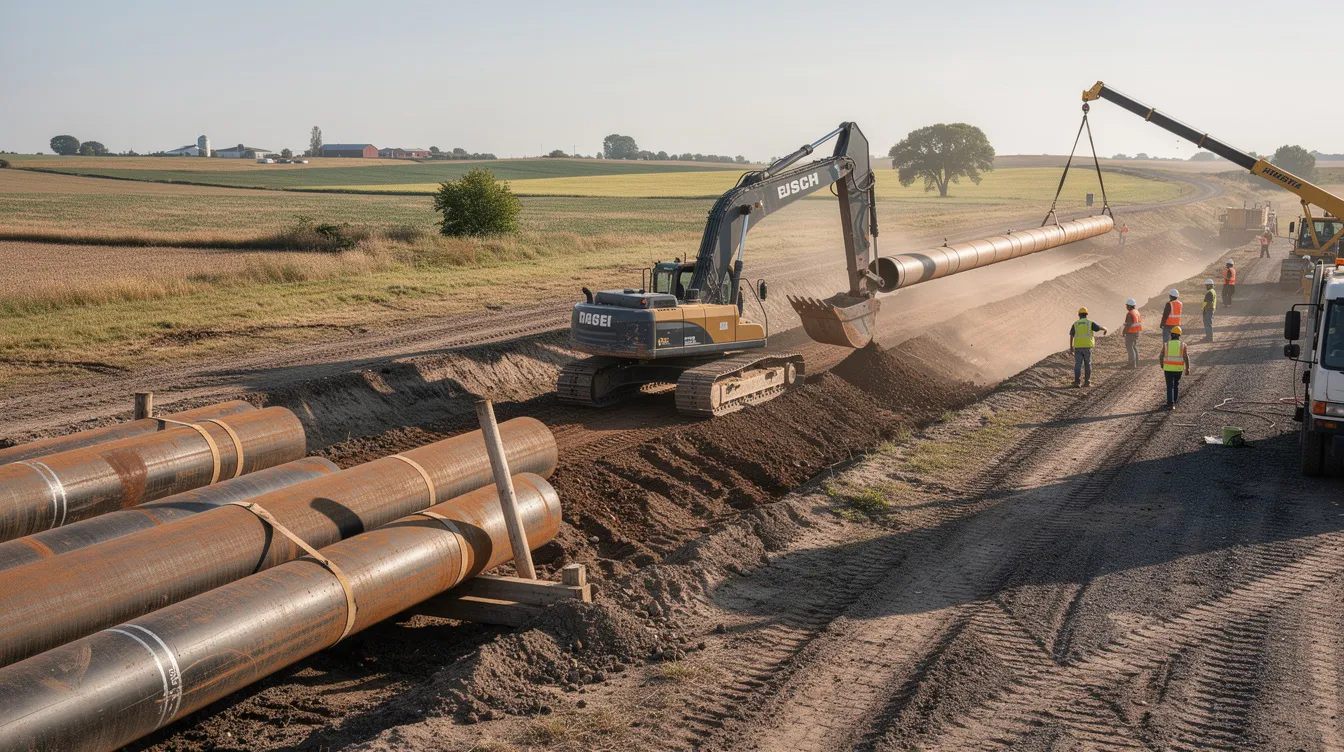
MSAs interact with work orders, job tickets, and purchase orders to define the scope of services for drilling, completion, construction, gathering, processing, compression, and maintenance work. Vague or poorly drafted scope and performance standards create operational disputes, cost overruns, and allegations of breach of contract or defective work.
Key elements that should be addressed include technical specifications, integration with operator field development plans, acceptance criteria, change order procedures, delay and standby rate provisions, and remedies for nonconforming work. INK™ Law’s energy and natural gas lawyers frequently work with in-house engineers and project managers to translate engineering expectations into contractual language that holds up in court or arbitration.
Consider a midstream pipeline construction project where the operator requested additional bore crossings not contemplated in the original scope. With robust change order language in the MSA, the parties resolved a potential seven-figure extra-work claim by following the pre-agreed approval process, documenting cost impacts in real time, and avoiding formal dispute resolution entirely.
Royalty, Production, and Revenue-Related Risk in MSAs
While master service agreements are typically between operators or midstream companies and service providers rather than royalty owners, the way MSAs allocate responsibility for measurement, metering, and reporting can directly influence royalty disputes downstream. Inaccurate measurement, faulty gathering system operations, or processing plant performance can trigger underpayment claims from mineral owners in active basins like the DJ and Permian.
Landowners often face unpaid royalties from drilling companies when measurement or reporting failures go undetected for months. Shut-in royalties compensate landowners when wells are inactive, but disputes over whether shut-in provisions have been properly triggered are common. Royalty disputes frequently arise over lease agreement terms, and some landowners make baseless claims for higher royalties when gas prices spike or production data is delayed. Legal review of contracts is crucial to avoid royalty disputes on both sides.
Oil and gas attorneys assist with lease agreements and royalty disputes by aligning MSA terms with gas leases, joint operating agreements, and marketing contracts. MSAs can assign responsibility for volume measurement, data retention, and cooperation in audits or government inquiries, helping operators defend themselves in royalty litigation matters or regulatory investigations. The firm’s oil and gas asset acquisition and natural gas practices connect MSA risk allocation to acquisitions, divestitures, and gas supply or transportation agreements.
Regulatory, Environmental, and ESG Considerations in Oilfield MSAs
Regulatory and ESG pressures facing the oil and gas industry have intensified since 2020. MSAs must now address environmental compliance, safety responsibilities, and reporting obligations more explicitly than they did a decade ago.
Key regulatory touchpoints intersecting with MSA obligations include state oil and gas commissions, EPA air and water rules under the clean air act and related statutes, the federal energy regulatory commission for certain midstream activities, the national environmental policy act for federal land operations, the endangered species act for habitat-sensitive areas, the california environmental quality act for West Coast operations, and the hazardous materials safety administration for pipeline safety. Oilfield MSAs should specify duties regarding pollution risks and liabilities, including who obtains permits, who handles spill response, who reports emissions data, and who pays for environmental remediation.
Oil and gas attorneys help navigate environmental liability issues by drafting clear environmental indemnity provisions. Misallocation of these duties can lead to costly enforcement actions and civil litigation. INK™ Law’s strategic energy law practice incorporates ESG and environmental risk allocation into contract drafting, helping clients demonstrate responsible operations to investors, lenders, and joint venture partners.
Call INK™ Law at (720) 307-2627 or reach out through the online contact portal to have your environmental and safety provisions reviewed or modernized.
Integrating MSAs with M&A, Joint Ventures, and Financing Transactions
MSAs do not exist in a vacuum. They influence, and are influenced by, mergers and acquisitions, operating agreements, farmouts, and financing arrangements throughout the lifecycle of an energy business.
Common transactional scenarios where existing MSAs become critical include acquiring producing properties in 2025 that are subject to legacy MSAs with unfavorable indemnity terms; spinning off midstream assets into an affiliate where the existing service contracts do not permit assignment; entering a joint venture where each partner brings different service contracts with conflicting risk profiles; or refinancing with lenders who require certain risk allocations in underlying service agreements.
INK™ Law’s M&A and corporate teams conduct due diligence on existing MSAs, flagging change-of-control provisions, assignment restrictions, termination rights, and hidden indemnity obligations that might reduce deal value. The firm’s track record in energy mergers and acquisitions and securities work allows it to harmonize MSA risk with purchase and sale agreements, credit agreements, and investor expectations. Buyers, sellers, and investors in the oil and gas sector should bring INK™ Law into the deal early for MSA-focused due diligence and contract rationalization of related assets and mexico assets across their portfolios.
Dispute Prevention, Litigation Readiness, and Enforcement Strategies
Well-drafted MSAs are a primary tool for preventing disputes, but they must also be written with future enforcement and litigation realities in mind. Conflicts can arise when parties fail to meet MSA obligations, whether through missed payments, safety violations, or scope disagreements. Without clear enforcement language, those issues can escalate into oil and gas disputes or gas disputes.
Lawyers help establish the governing law and dispute resolution mechanisms in oilfield MSAs, which is critical when the MSA covers work in multiple basins. In Cannon Oil & Gas v. KLX Energy, the Texas choice-of-law clause did not override Wyoming’s anti-indemnity statute because the work was performed in Wyoming. Clear notice requirements, cure periods, and escalation procedures can prevent disputes from escalating to litigation matters.
Typical MSA dispute categories include unpaid invoices and lien filings, personal injury and wrongful death claims, equipment damage, environmental incidents, scope of work disagreements, and termination for cause vs. convenience. Attorneys can mediate disputes between landowners and drilling companies, and INK™ Law’s commercial litigation practice works with the transactional team to ensure MSAs are drafted for strategic advantage if disputes related to contract interpretation arise. That includes aggressive advocacy when needed on dispute resolution matters, jury trial waivers where enforceable, and selection of arbitration forums.
Customizing MSAs for Upstream, Midstream, and Energy Services Clients
A one-size-fits-all master service agreement rarely works across the diversity of the oil and gas industry, and those differences are especially pronounced across segments of the Texas oil market when clients operate in multiple basins and states.
| Segment | Key Risk Focus | MSA Priorities |
|---|---|---|
| Upstream (drilling, completion, production) | Catastrophic well-site events, H2S, blowouts, personal injury | Well-control insurance, pollution indemnity, gross negligence carve-outs |
| Midstream (gathering, compression, processing, pipelines) | System reliability, third-party claims, regulatory compliance | Performance standards, FERC and state pipeline safety, natural gas liquids handling, revenue risk |
| Oilfield services (wireline, pressure pumping, construction, fabrication) | Margin protection, cash flow, lien rights, cross-liability | Payment terms, lien preservation, insurance limits, additional insured endorsements |
Oil and gas attorneys provide legal support for oilfield service companies, oil field services firms, and independent oil producers alike. INK™ Law frequently serves as outside general counsel for energy companies, helping them maintain a portfolio of standardized but segment-specific MSAs that can be adapted to new counterparties and projects.
Businesses considering a new standardized MSA template for 2026-2027 should engage INK™ Law for a strategic redesign aligned with current law, insurance markets, and ESG expectations. The firm can assist clients across a broad range of oil and gas properties and gas properties in various forms of operations.
INK™ Law’s Process for Reviewing, Drafting, and Negotiating Oilfield MSAs
INK™ Law’s MSA process follows a structured approach:
- Intake and scoping: understanding the client’s operational profile, counterparty, basin, and commercial objectives.
- Risk mapping and issue spotting: identifying provisions that create uninsured exposure, conflict with state law, or misalign with existing JOAs and financing documents.
- Redline drafting: producing a marked-up version with explanatory comments so management teams and investors can quickly grasp key risk allocations.
- Negotiation strategy: prioritizing the provisions that matter most and preparing fallback positions for less critical terms.
- Finalization and implementation guidance: delivering a clean executed agreement with a compliance checklist for field operations.
The firm tailors its involvement based on client needs: fast-turn “red flag” reviews for time-sensitive deals, full-scale drafting and negotiation for major multi-year service relationships, and ongoing legal counsel for portfolio-level MSA management. INK™ Law uses clear, business-focused communication, including executive summaries and deal memos, so that management teams have a comprehensive understanding of decision points. Engagement models include project-based fees and outside general counsel arrangements, particularly attractive to growing energy companies, gas companies, and infrastructure developers.
Call (720) 307-2627 or share existing contract documents securely through the online contact page to schedule an MSA strategy session.
When to Call an Oilfield Master Service Agreement Lawyer
There are specific trigger events indicating it is time to involve specialized oil and gas attorneys rather than relying on internal templates or counterparties’ forms:
- Entering a new basin or state with unfamiliar anti-indemnity and lien statutes
- Signing a “standard” MSA from a much larger counterparty
- Planning an asset acquisitions or divestiture of oil and gas assets encumbered by multiple existing MSAs
- Facing a serious incident or near-miss that exposes potential indemnity and coverage gaps
- Receiving a dispute notice under an existing MSA
- Preparing for gas exploration in new jurisdictions or offshore oil operations
- Onboarding new service providers for crude oil production or processing operations
Early legal review of contracts usually costs far less than post-incident litigation or retroactive restructuring. INK™ Law can quickly identify the most material risk points requiring attention, providing advice that protects the best interests of the client. Decision-makers, including CEOs, COOs, general counsel, commercial managers, and risk officers at oil and gas companies, should reach out for a preliminary discussion by calling (720) 307-2627 or sending a message via INK™ Law’s contact portal.
The firm supports both single-project engagements and long-term outside general counsel relationships for energy and gas companies across the oil and gas sector looking to systematize their MSA approach as part of their broader legal matters. Law firms that represent clients in the middle east, the international association of energy lawyers, or anywhere across the gas sector can coordinate with INK™ Law on multi-jurisdictional matters.
Start Protecting Your Oilfield Operations Today
Your MSA should protect your operations, align with your insurance program, and comply with the law of every state where you work. You do not need to navigate these issues alone. INK™ Law’s interdisciplinary oil and gas team understands the operational realities of producing properties, the demands of investors and lenders, and the expectations of regulators across Colorado, Texas, Wyoming, North Dakota, Oklahoma, Utah, Arizona, and beyond.
Gather your current or proposed MSAs and schedule a confidential review. Call INK™ Law at (720) 307-2627 to discuss your oilfield MSA needs, or send us a message through our secure online contact form to request a consultation. The firm’s significant experience with epc contracts, sale agreements, credit facilities, project finance structures, and regulatory matters ensures that your gas team and legal services are aligned from day one.

Frequently Asked Questions About Oilfield Master Service Agreements
Do I really need a lawyer to review a “standard” oilfield MSA?
There is no truly “standard” MSA in the oil and gas sector. Even forms labeled as “industry standard” contain customized indemnity, insurance, and lien provisions that favor the drafter. Counterparty forms are drafted by their own law firms to protect their interests. A focused legal review can uncover material risk shifts and negotiation opportunities. INK™ Law provides streamlined, business-focused reviews that highlight only the provisions materially affecting risk and economics, rather than rewriting the entire document without need. The attorney client relationship starts with understanding which clauses actually move the needle for your business.
How long does it take to negotiate an oilfield master service agreement?
Timelines depend on deal complexity. A focused redline of a single-counterparty MSA can take several days. A heavily negotiated agreement involving multi-state operations or major field development typically takes two to four weeks. When MSA terms must be coordinated with M&A or financing transactions, the timeline extends further. Clients who involve INK™ Law before operational deadlines become critical typically achieve better contractual protections with less friction. If you have an urgent timeline, contact (720) 307-2627 to discuss expedited review options.
Can INK™ Law help if I am already in a dispute under an existing MSA?
Yes. INK™ Law’s commercial litigation team can interpret existing contract terms, advise on rights and obligations, and represent clients in negotiations, mediation, arbitration, or court proceedings arising from oilfield MSAs. Early evaluation of the contract, correspondence history, and relevant operations records strengthens a client’s position before formal litigation begins. Contact the firm through the online contact portal or by calling (720) 307-2627 for a confidential assessment.
How do oilfield MSAs interact with joint operating agreements and oil and gas leases?
MSAs govern the relationship between operators or midstream companies and service providers. Operating agreements control the relationship among working-interest owners. Gas leases govern the relationship between mineral owners and lessees. Inconsistencies between these documents on indemnity, environmental obligations, or measurement can create gaps that complicate royalty disputes and cost-sharing. INK™ Law performs holistic contract audits to align MSAs, JOAs, leases, and marketing agreements, especially when clients are expanding operations or preparing for asset acquisitions or financing.
In which states does INK™ Law handle oilfield MSAs and related energy contracts?
INK™ Law is headquartered in Denver, Colorado, and routinely handles energy and natural resources legal matters for oil and gas clients operating in Colorado, Texas, North Dakota, Oklahoma, Utah, Wyoming, Arizona, and other key jurisdictions. The firm is experienced with multi-state portfolios and can coordinate with local counsel where specific state licensing or unique statutory issues require it, while providing a unified strategic approach to MSAs. Multi-state operators, midstream developers, and oil and gas companies can contact INK™ Law via the online contact page or at (720) 307-2627 to discuss their geographic footprint and legal services needs.