Solar Energy Lawyer: Transactions, Legal Strategy for Development, Investment, Acquisition, and Commercialization
The U.S. solar market is scaling faster than at any point in history, and the legal complexity of getting projects financed, built, and operating is scaling right alongside it. Whether you are developing a 50 MW community solar portfolio in Colorado or acquiring a 300 MW utility-scale asset in Texas, the transaction demands a solar energy lawyer who can align every contract, permit, and financing document into a single bankable structure. This article breaks down exactly how that legal strategy works and why it matters at every stage of a solar project’s lifecycle.
Key Takeaways
- INK™ Law structures, negotiates, and closes sophisticated solar project and portfolio transactions across the United States, with particular emphasis on Colorado, Texas, Arizona, Utah, Wyoming, North Dakota, Oklahoma, and major markets like Denver, Houston, and Phoenix. The firm represents developers, investors, independent power producers, and energy funds in deals spanning tens to hundreds of megawatts and nine- to ten-figure capital stacks.
- Solar sponsors, investors, and acquirers hire the firm to handle project development, construction contracts, construction financing, offtake, tax equity structuring, and long-term operations for both utility-scale and community solar assets. Legal counsel is crucial for navigating solar project complexities, from early-stage site control through commercial operation and eventual exit.
- INK™ Law integrates corporate, M&A, energy, securities, and real estate capabilities to make solar transactions bankable and executable from term sheet to COD and beyond. A lawyer specializing in solar energy law helps clients navigate regulations and agreements across every phase of the development cycle.
- This article is written for sophisticated energy companies, investors, and business owners who need legal counsel for multi-million-dollar renewable energy projects, not for residential homeowners or rooftop installers.
Ready to discuss a current or upcoming solar project? Call INK™ Law at
(720) 307-2627 or
message the team online for a strategy call.
INK™ Law’s Solar Energy Transaction Practice at a Glance
INK™ Law is a Denver-headquartered commercial and energy law firm with a national solar and renewable energy practice focused on complex transactions rather than consumer matters. The firm’s Energy & Natural Resources group works hand-in-hand with its Corporate & Business Law, Mergers & Acquisitions, Securities & Finance, and Real Estate teams to support the full lifecycle of a solar project or portfolio.
The firm’s attorneys counsel clients ranging from utility-scale solar developers and community solar sponsors to independent power producers, energy infrastructure funds, private equity investors, tax equity investors, and corporate buyers of solar assets. Transaction sizes typically range from tens to hundreds of megawatts, with capital stacks frequently reaching nine and ten figures. Projects like a 300 MWac solar facility developed in Utah with legal support illustrate the scale of work that competent solar energy attorneys handle in today’s market.
Geographic focus spans Colorado, Arizona, Utah, Wyoming, Texas, North Dakota, Oklahoma, and other key markets in the WECC, SPP, and ERCOT regions. Core services include:
- Project development and site control
- Power purchase agreements and offtake structuring
- Construction contracts (EPC, BOP, O&M)
- Construction and term financing
- Tax equity and IRA incentive structuring
- Acquisitions, divestitures, and portfolio optimization
- Joint ventures and development partnerships
Strategic Legal Counsel for Utility-Scale and Community Solar
The solar energy landscape has shifted dramatically since the Inflation Reduction Act of 2022 expanded federal incentives and introduced new bonus credits for domestic content, energy communities, and low-income projects. In 2025, U.S. utility-scale solar generation grew by 34%, and wind and solar together accounted for roughly 17% of total generation. Over 500 MW of renewable energy projects have been developed by firms like Hill Wallack LLP, and Parsons Behle & Latimer advised on solar projects exceeding 500 MW capacity, reflecting the growing demand for experienced legal teams in this space.
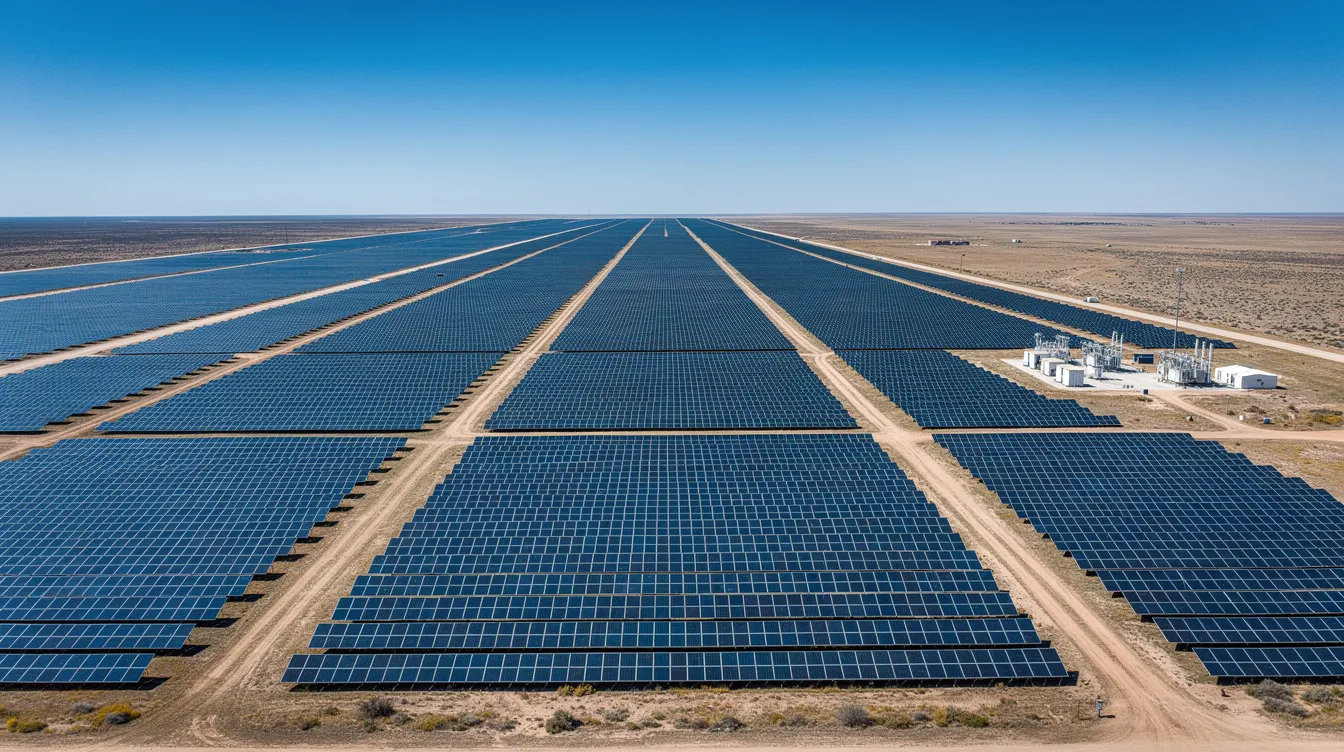
The legal needs of utility-scale solar and community solar diverge significantly. Utility-scale projects involve high-voltage transmission interconnection, large-scale project finance structures, and offtake contracts with utility companies or corporate buyers. Community solar projects, by contrast, require subscriber management, retail regulatory compliance, consumer protection overlays, and program-specific rules that vary by state. INK™ Law tailors strategies for each, drawing on decades of experience across both traditional energy and renewables.
The firm uses its significant experience with oil and gas, midstream, and power projects to anticipate bankability issues and regulatory risk in solar deals before they become closing obstacles. Whether the client is a greenfield developer or a later-stage investor acquiring shovel-ready or operating solar projects, INK™ Law aligns legal strategy with the client’s investment thesis and exit horizon.
Planning a new solar project or platform? Schedule an early-stage strategy session to surface risks before they are baked into term sheets.
Project Development: Site Control, Permitting, and Early-Stage Risk Management
Solar energy lawyers assist with project development and land use from the earliest stages, and the quality of that early work determines whether a project reaches financial close. Solar project development often requires thorough contracts covering everything from land rights to environmental compliance.
INK™ Law manages the following early-stage development workstreams:
- Site control instruments: Ground leases, long-term easements, purchase and sale options, and site access or crossing agreements, all structured to align with lender and tax equity expectations
- Local land use approvals and permitting: County conditional use permits, zoning changes, subdivision and platting matters, and building permits, where early legal involvement can reduce entitlement risk and delays
- Title review and curative actions: Resolving gaps or defects, subordinations, releases of liens and encumbrances, and addressing mineral rights conflicts in states like Texas and North Dakota to protect project real estate value
- Environmental and wildlife diligence: They ensure projects comply with environmental regulations and permitting, including NEPA and ESA overlays when a federal nexus exists, state wildlife agency consultations, and wetlands and water issues
In a study of roughly 32 utility-scale solar projects that completed environmental impact statements,
12 were challenged in court with 22 separate legal challenges. Some projects were terminated; others faced delays measured in years. Early diligence is not optional.
They negotiate land use agreements to secure necessary property rights for projects and help sponsors structure development-stage letters of intent, exclusivity arrangements, and joint development agreements with co-developers to align economics with risk allocations.
Interconnection Strategy and Grid Access
Interconnection is now often the gating item for solar projects in regions like ERCOT, SPP, and WECC. Queue congestion and network upgrade costs materially impact project economics, and projects that do not have a clear interconnection strategy frequently fail. They assist with interconnection agreements to connect solar projects to the grid, and the legal strategy around those agreements can determine whether a project is financeable.
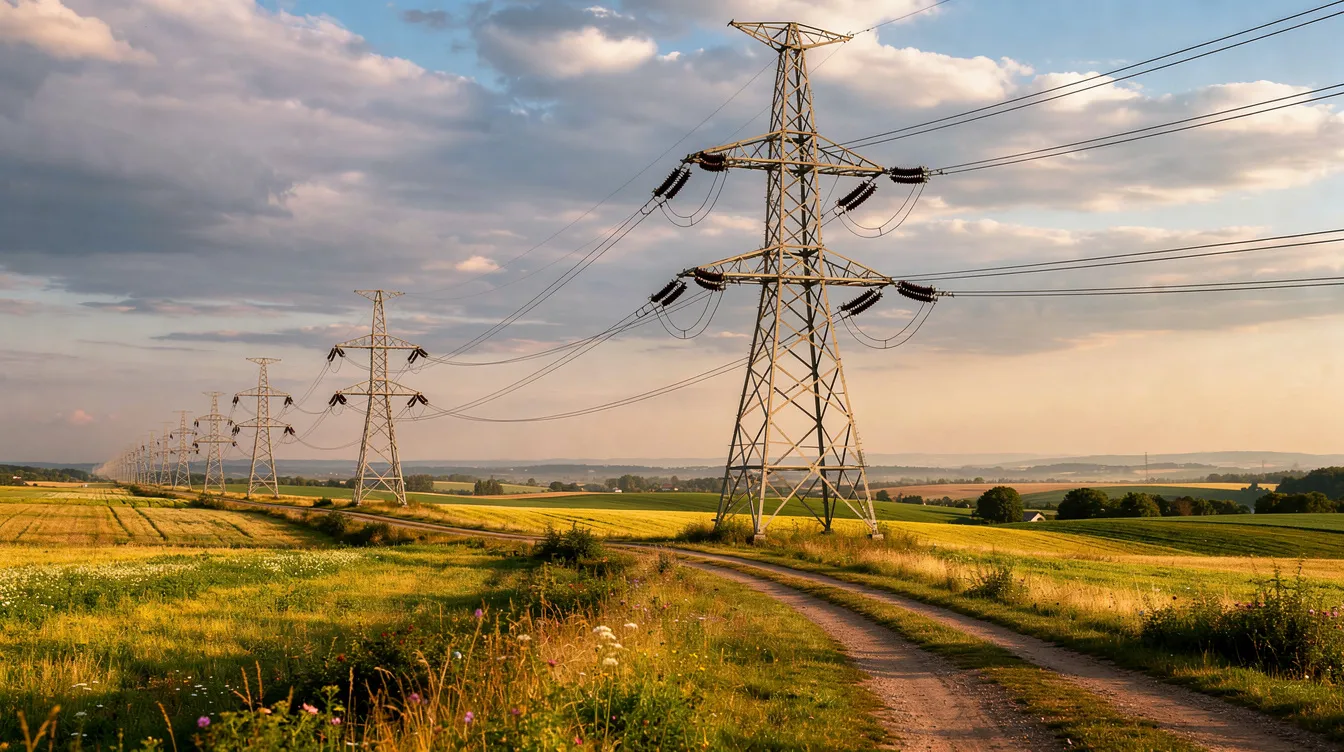
INK™ Law coordinates with technical consultants and transmission planners to align legal strategy with engineering realities. Common interconnection documents and issues include:
- Queue applications and study process management
- Generator interconnection agreements with utilities or ISOs/RTOs
- Cost responsibility for point-of-interconnection facilities and network upgrades
- Milestone security deposits
- Curtailment risk and re-study exposure
The numbers tell the story. According to Lawrence Berkeley National Laboratory,
average interconnection costs for completed utility-scale solar, wind, and storage projects in non-ISO balancing authorities averaged approximately $194/kW between 2018 and 2024. For larger projects over 400 MW, network upgrade costs averaged roughly $200/kW; for smaller projects under 25 MW, closer to $300/kW. Projects that withdrew from queues faced far higher estimates, with
PJM withdrawals averaging $599/kW during the 2020–2022 period.
Delays or failed interconnection can trigger default or termination events in PPAs, construction contracts, and financing documents. INK™ Law’s role includes harmonizing these cross-default regimes so that one contractual failure does not cascade into a project-ending chain reaction.
Power Purchase Agreements and Offtake Structures
Offtake is the commercial backbone of a solar project, driving bankability, financing terms, and exit valuations. Solar lawyers draft and negotiate power purchase agreements that form the revenue foundation of every project.
INK™ Law structures and negotiates the following offtake arrangements:
- Traditional utility PPAs
- Corporate PPAs (physical and virtual or synthetic)
- Community solar subscriber agreements
- Tolling or capacity arrangements for solar-plus-storage projects
Key bankability terms the firm focuses on include contract tenor, pricing and escalators, curtailment allocations, performance guarantees, change-in-law protections, environmental attribute (REC) ownership, and credit support. The firm aligns PPA terms with interconnection, site control, EPC/O&M agreements, and financing documents so that obligations and risk allocations are consistent across the capital stack.
For deeper detail on PPA structuring, readers can visit INK™ Law’s dedicated power purchase agreement practice page.
Construction Contracts: EPC, Equipment Supply, BOP, and O&M
Well-drafted construction contracts are critical to translating development-stage value into an operating solar asset. Lenders and tax equity investors closely scrutinize these documents, and misalignment between construction and financing terms can delay or kill a closing.
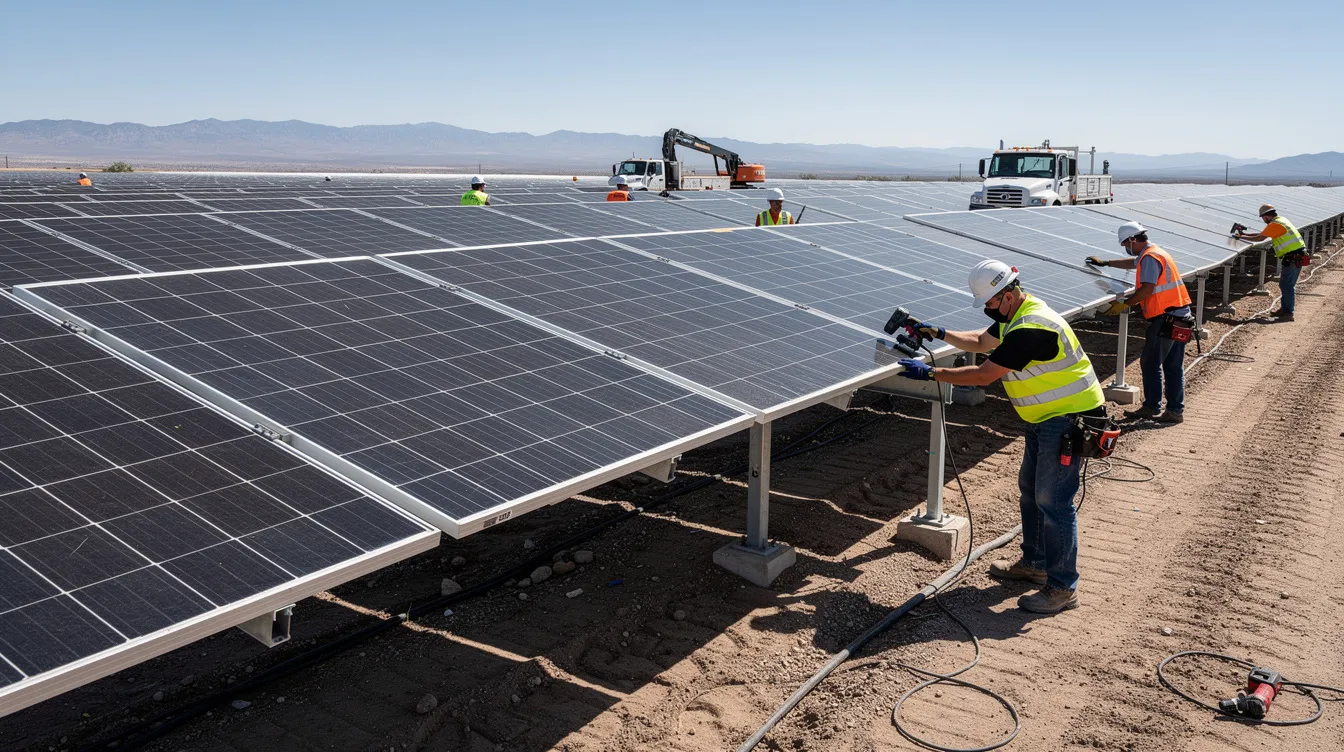
INK™ Law’s work on engineering, procurement, and construction contracts for utility-scale projects includes:
- Allocation of design responsibility and interface management
- Performance guarantees tied to capacity, degradation, and availability
- Delay liquidated damages and milestone alignment with interconnection schedules
- Separate or supplemental agreements for balance-of-plant, module and inverter supply, and long-term operations and maintenance contracts
- Warranty backstops and performance metrics
The firm also addresses construction risk management topics: force majeure, change orders, supply chain disruptions, price adjustment mechanisms, and contractor security such as letters of credit, parent guarantees, and performance bonds. Contractors and developers both benefit from contracts that clearly allocate risk rather than leaving it to later negotiation or litigation.
INK™ Law integrates construction contracts with construction financing documents to avoid misaligned triggers for default or step-in rights by lenders and investors.
Construction Financing and Capital Stack Design
Solar projects are capital-intensive and require bespoke construction financing structures that reflect the specific risk profile of each asset. They help structure financing transactions for solar projects, and contracts protect interests in solar project financing at every level of the capital stack. Legal counsel is crucial for solar project financing success.
The main types of construction and long-term debt used in solar energy projects include:
- Construction loans and bridge facilities
- Term loans (mini-perm and fully amortizing)
- Mezzanine debt
- Revolving credit facilities
- Tax equity commitments (discussed in the next section)
INK™ Law structures and negotiates credit agreements, security and collateral documents, intercreditor agreements, and direct agreements or consent rights with offtakers and key project counterparties. The firm helps sponsors position projects to satisfy lenders’ and tax equity investors’ bankability standards relating to PPAs, construction contracts, permits, and sponsor experience. A 300 MWac solar facility was financed in Utah through the type of multi-layered capital stack that exemplifies this work. Legal teams help navigate complex financing regulations that govern these structures at both federal and state levels.
Developers or funds planning construction financing in 2025–2027: Call
(720) 307-2627 to discuss timing, documentation, and current market expectations for lender terms.
Tax Equity, Incentives, and IRA-Driven Structuring
Solar energy lawyers advise on tax incentives and credits available for projects, and the Inflation Reduction Act of 2022 made that advice significantly more complex and more valuable. The IRA restored and expanded the federal investment tax credit with bonus credits for domestic content, energy communities, low-income projects, and community solar, while also introducing direct pay and
tax credit transferability mechanisms.
The primary solar tax equity structures INK™ Law encounters include:
| Structure |
Advantages |
Key Risks |
| Partnership Flip |
Flexible; well-understood; maximizes IRA bonus credits |
Complexity in flip-date mechanics; change-in-law exposure; recapture risk |
| Sale-Leaseback |
Upfront capital; investor gets credits and depreciation |
Lease payment obligations; IRS eligibility scrutiny |
| Inverted Lease |
Favorable for developers with strong credit profiles |
Limited applicability under current Treasury rules |
| Credit Transfer |
Simplifies monetization; no tax equity partner required |
Eligibility criteria; transfer discounts; audit risk |
The firm coordinates with tax advisors and accountants to align operating agreements, partnership structures, and financing documents with tax assumptions and allocation mechanics. INK™ Law assists clients in evaluating eligibility for bonus credits and reflecting those expectations in transaction documents and closing conditions.
Recapture risk and change-in-law issues are addressed through properly drafted covenants, indemnities, and reserve or security arrangements in solar project documents. Getting these provisions wrong can mean losing millions of dollars in credits years after a project reaches commercial operation.
Solar Mergers, Acquisitions, and Portfolio Transactions
Many of today’s solar deals involve the acquisition or sale of development pipelines, late-stage projects, or operating portfolios across multiple jurisdictions and ISOs. INK™ Law structures and negotiates purchase and sale agreements for both asset deals and equity deals, membership interest purchase agreements, and joint-venture or co-investment arrangements for solar assets.
The firm integrates standard corporate M&A concepts-reps and warranties, covenants, indemnities, price adjustments, earn-outs-with energy-specific topics like PPA risk, interconnection status, curtailment exposure, and environmental compliance history. Due diligence on a solar acquisition covers ground that generic corporate counsel rarely encounters: queue position value, network upgrade cost exposure, REC contract assignment, and tax equity consent requirements.
INK™ Law also helps developers and funds package portfolio assets across states like Colorado, Texas, and Arizona for sale to infrastructure funds, strategic buyers, or utilities. Parsons Behle provided legal counsel for solar projects exceeding 500 MW capacity in transactions of this nature, and deals of similar scale increasingly require counsel well versed in multi-state regulatory variation.
Buying or selling solar projects? Contact INK™ Law at
(720) 307-2627 or through the
online form for an acquisition or divestiture strategy review.
Joint Ventures, Development Services, and Strategic Partnerships
Many solar sponsors and investors pursue platforms or portfolios through joint ventures, development services agreements, or programmatic capital partnerships rather than one-off project ownership. INK™ Law helps design structures including joint development agreements between early-stage developers and capital providers, co-development and co-ownership JVs, and build-transfer models with utilities or corporate offtakers.
Key JV issues the firm addresses include:
- Capital contribution and funding obligations
- Decision-making and deadlock mechanisms
- Development fees and promote structures
- Transfer restrictions and exit or buy-out mechanics
The firm ensures IP rights and data-project models, interconnection studies, proprietary subscriber management systems for community solar-are properly owned, licensed, or shared among joint venture parties involved in these arrangements. INK™ Law’s outside general counsel work for energy companies provides ongoing strategic guidance on partnerships, not just one-time transaction support.
Regulatory Compliance and Market Participation
Solar projects operate within overlapping federal, state, and local regulatory regimes, including FERC-jurisdictional matters, state public utility commissions, and RTO/ISO market rules. Solar energy lawyers manage regulatory compliance with federal and state laws that govern everything from siting to market participation. The
Sabin Center at Columbia Law School has documented at least 888 state and local restrictions on renewable energy projects across 48 states through 2025, along with 567 projects facing significant local opposition.
INK™ Law helps solar clients navigate state-level renewable portfolio standards, community solar program rules, net metering or value-of-solar tariffs, and interconnection procedures. Regulatory issues at the state level vary dramatically: New Jersey BPU regulatory decisions such as NJ Land (2017) and SunPower (2019) illustrate how state-specific rulings create new rules that developers must account for in project structuring and compliance. The firm also provided guidance on corporate and securities compliance for sponsors raising capital for solar platforms, including private offerings to accredited investors and fund structuring.
INK™ Law advises on ESG disclosures and sustainability reporting related to renewable energy holdings when relevant to investors, lenders, or corporate offtakers. While the firm is not a lobbying shop, it understands how evolving policy and regulation affect deal terms, risk allocation, and long-term asset value.
Real Estate and Energy Infrastructure Interface
Solar projects are as much real estate and infrastructure assets as they are energy projects, requiring careful alignment between land rights, access rights, and energy operations. INK™ Law structures and negotiates site leases, easements for access, transmission, collection lines, and roads, surface-use agreements, and agreements addressing subsurface mineral or resource development.
The firm coordinates solar project real estate with midstream and transmission easements, road use agreements, and utility rights-of-way, including compatibility with existing oil and gas operations in states like Colorado and Texas. Due diligence items commonly managed include ALTA surveys, title policies tailored to utility-scale projects, and endorsements requested by project lenders and tax equity investors.
INK™ Law’s real estate attorneys collaborate with the energy and corporate groups to ensure that real estate rights remain aligned through M&A transactions and refinancing events, preventing gaps that could undermine project value at the worst possible moment.
Dispute Avoidance and Commercial Litigation Readiness
While INK™ Law’s primary focus is transactional, solar projects sometimes encounter disputes over construction performance, PPA interpretation, interconnection obligations, or joint venture governance. Solar lawyers represent clients in disputes related to contracts and regulatory issues, and the firm’s Commercial Litigation team is experienced in business and contract disputes and can step in when negotiations break down.
The firm emphasizes dispute prevention by design in transaction documents through:
- Well-drafted notice provisions and cure periods
- Step-in rights for lenders and investors
- Alternative dispute resolution escalation processes
- Tailored limitation-of-liability frameworks
- Indemnity and security provisions aligned across all project agreements
Consider this scenario: a developer’s EPC contractor misses a mechanical completion milestone, which triggers a PPA delay default, which in turn creates a construction loan event of default. If the contracts were drafted in isolation, the developer faces cascading termination rights across three parties simultaneously. When litigation-informed transaction lawyers structure those contracts from the outset, aligned cure periods and step-in rights give the developer breathing room to solve the underlying problem without losing the entire project.
The firm also assists with post-closing adjustments, earn-out calculations, and indemnity claims related to solar M&A deals.
Outside General Counsel for Energy and Renewable Platforms
Many solar sponsors, independent power producers, and energy-focused funds prefer a single outside general counsel relationship to coordinate corporate, energy, real estate, and IP issues across their portfolio companies. INK™ Law serves in this role for clients who need ongoing strategic solutions rather than purely transactional representation.
Recurring matters the firm handles as outside GC include:
- Contract drafting and negotiation across procurement and offtake
- Project and corporate governance for municipal and private entities
- Compliance and risk management across multiple jurisdictions
- IP strategy for proprietary software or processes
- Day-to-day commercial transactions and business guidance
The firm builds institutional knowledge of a client’s portfolio, preferred deal structures, and risk tolerance, which reduces transaction friction and legal spend over time. These engagements scale from supporting a single regional developer to acting as a long-term strategic partner for multi-state renewable energy platforms.
Executives and general counsel of energy companies: Explore an outside GC relationship by calling
(720) 307-2627 or
scheduling a consultation online.
Why Solar Sponsors, Investors, and Operators Choose INK™ Law
INK™ Law brings cross-sector energy experience, integrated corporate and finance capabilities, and a practical, business-oriented approach to risk management in renewable energy. The firm does not just draft contracts in isolation. It anticipates ripple effects: how a PPA default triggered by interconnection delay can cascade into a construction financing default, or how a title defect discovered late in diligence can derail a tax equity closing.
Concrete advantages for solar energy clients include:
- Deep familiarity with renewable energy project documents and the ability to align PPAs, construction contracts, and financing
- Responsiveness to fast-moving deal timelines across the country
- Understanding of lender and investor expectations in current market conditions
- Experience in traditional energy (oil and gas, midstream, pipeline easements) that helps address conflicts between solar projects and existing infrastructure
- Footprint across Colorado, Arizona, Utah, Wyoming, Texas, North Dakota, and Oklahoma, with assisted efforts in major markets like Denver, Houston, Phoenix, Salt Lake City, and Los Angeles
Over 500 MW of renewable energy projects have been developed with the kind of integrated legal representation INK™ Law provides. The firm aims to be a long-term strategic partner that helps clients achieve commercial goals, not a one-off deal lawyer who disappears after closing.
Getting Started: What to Expect When You Contact INK™ Law
Early-stage conversations with a solar energy lawyer can materially improve project outcomes by surfacing risks before they are baked into term sheets or PPAs. Hiring counsel before signing binding agreements is one of the highest-ROI decisions a sponsor or investor can make.

The typical intake process includes:
- Initial consultation to understand project scope, authority structure, and commercial goals
- Document review of key materials like term sheets, site control agreements, draft PPAs, or EPC proposals
- Scoping of legal services and timeline, with details on which workstreams require immediate attention
- Fee structure discussion, with transparency about budgets and assumptions before substantive work begins
The firm tailors its engagement to client needs: targeted reviews of specific contracts, full cradle-to-COD project representation, portfolio M&A support, or ongoing outside general counsel relationships. Conversations are handled by attorneys experienced in solar and renewable energy projects, not generic intake staff. The firm quickly determines whether it is the right fit for your transaction.
Call INK™ Law at (720) 307-2627 for a confidential consultation. Or submit your project details online to get started. Time-sensitive deals can usually be prioritized when flagged early.
Frequently Asked Questions About Solar Energy Transactions
The following FAQs address common questions that developers, investors, and operators ask about working with a solar energy lawyer. These answers are framed for sophisticated commercial clients, not residential or small consumer installers. For project-specific questions, call
(720) 307-2627 or
contact the firm online.
When should we bring in a solar energy lawyer during project development?
The ideal time is at or before signing term sheets for site control, offtake, or financing, and certainly before locking in EPC or interconnection agreements. Key risks should be negotiated up front rather than fixed in non-negotiable templates. INK™ Law often reviews LOIs, option agreements, and preliminary PPAs at an early stage to set the project on a bankable path while still controlling transaction costs. Specifically, the earlier you create alignment between your PPA, interconnection agreement, and financing term sheet, the fewer dollars you spend fixing problems later.
What information should we prepare before an initial consultation?
Gather basic project details: location, expected MW capacity, targeted COD dates, and interconnection status. Bring draft or executed key documents such as site control agreements, term sheets, PPAs, and EPC proposals, along with a high-level capital plan covering equity, tax equity, and debt. Providing this information allows INK™ Law to quickly identify red-flag concerns and propose a tailored legal work plan during or shortly after the first meeting.
Do you represent both developers and investors in solar deals?
INK™ Law represents developers, sponsors, independent power producers, and investors, but never opposite parties in the same transaction. Conflicts are checked carefully before any engagement. Cross-side experience helps the firm anticipate how counterparties, lenders, and tax equity providers will view deal terms, which can streamline negotiation for clients on either side of the table.
Can INK™ Law handle multi-state solar portfolios and platform-level transactions?
Yes. The firm routinely works on multi-state transactions, coordinating local counsel as needed, and structuring platform-level acquisitions, joint ventures, or financings that cover assets in multiple jurisdictions and RTO/ISO markets. The firm’s experience across Colorado, Texas, Arizona, Utah, Wyoming, North Dakota, Oklahoma, and other states, along with major municipalities and markets, positions it well for regional or national renewable energy portfolios.
How do legal fees typically work for solar project and portfolio transactions?
INK™ Law uses a mix of hourly, fixed-fee, and hybrid arrangements depending on deal size and scope. The firm is transparent about budgets and assumptions before starting substantive work, and fee structures are discussed during the initial consultation. To receive a proposal aligned with your project’s economics, call
(720) 307-2627 or
submit your details online.